
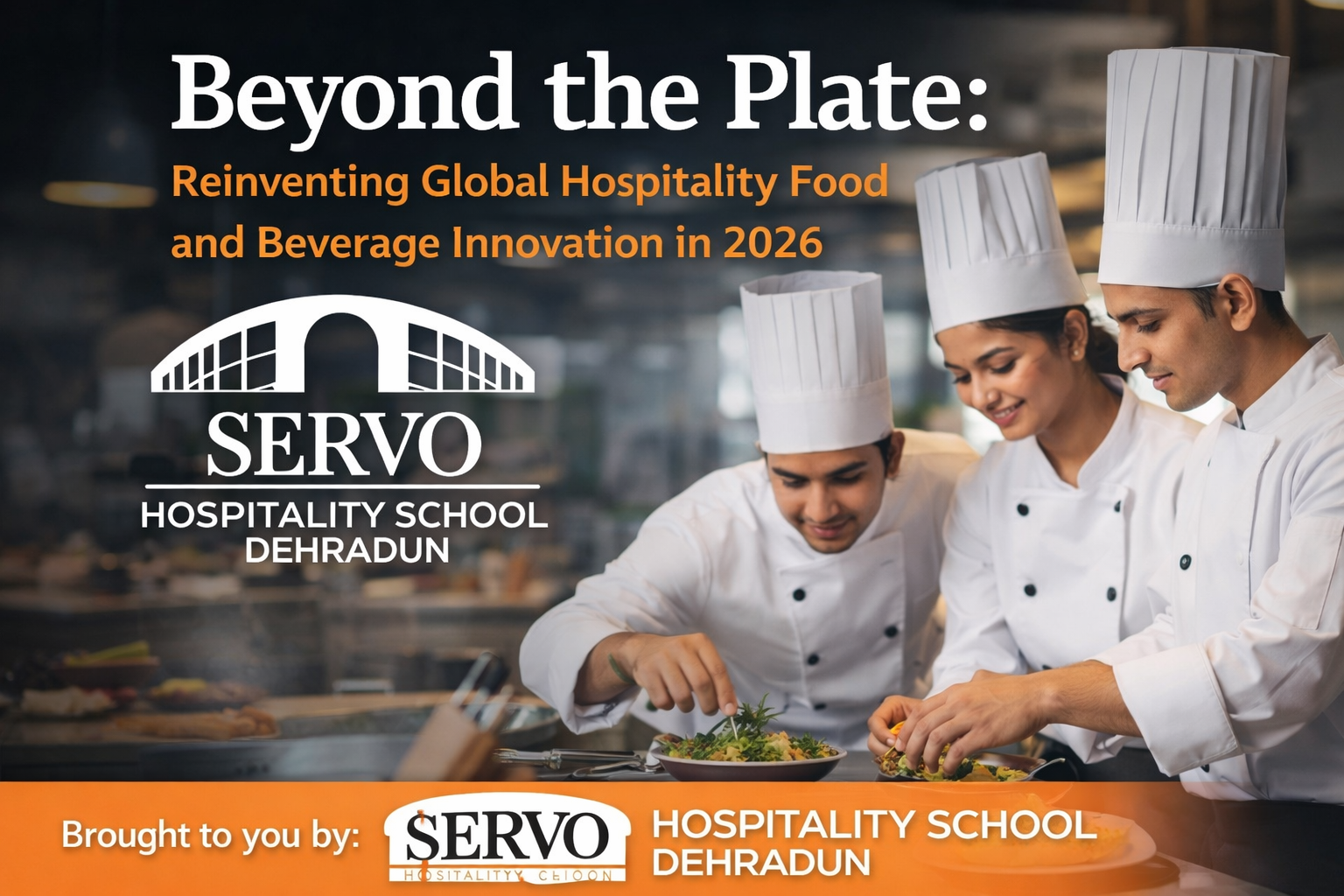
Beyond the Plate: Reinventing Global Hospitality Food and Beverage Innovation in 2026.
The future of the global hospitality industry is no different anymore as luxury rooms or architectural design is no longer the sole defining factor of the sector; instead, innovation in the field of food and beverage (F&B) is taking control of the guest experience, increasing the revenues, and transforming hospitality as an integrated experience. This paradigm is the combination of dining, technology, sustainability, and culture that will create memorable stays.
1. F&B as a Fundamental Pillar of Hospitality.
Modern travellers have considered food and drink as part and parcel of the hospitality experience. F&B services are no longer an epilogue or a peripheral service as they are now the core brand differentiators of a hotel or resort the world over. Hotels that integrate interesting destination-themed restaurants gain more ratings and destiny interaction, often turning in-house restaurants into social places that appeal to domestic and foreign customers.
2. Sustainable and Zero-Waste Restaurants.
Sustainability has become more than a buzzword; it has become a business necessity. In a bid to lessen environmental impact and increase their operational expenses, leading global brands are moving towards zero-waste and circular hospitality models, including root-to-stem cooking or using upcycled ingredients. Value addition to support properties is that with the help of technological solutions such as AI-based waste tracking, property owners can reduce food waste by a wide margin and at the same time increase efficiency.
3. Plant-Based, Healthy & Wellness-oriented Menus.
The 2026 menus indicate the increased consumerism on health, wellbeing, and ethical eating. Plant-based meals, substitutes, and functional nutritious foods are not niche, but they are in the mainstream. The ingredients include fermented food, adaptogens, and botanicals can be found on all menus, including luxury resorts and mid-end hotels, serving the needs of the guests who expect an ingredient that not only pleases the palate but will also enhance their energy levels.
4. Hospitality Identity and International Taste Blending.
Cultural storytelling also falls within the concept of innovation in hospitality. Cooks combine the local elements with the global elements and produce unique flavour combinations, and it glorifies originality and innovation. The fusion is a fusion of historical cultural context, as the world is globalizing and is attracting adventurous customers to the hotel in addition to making the hotel cuisine more pertinent to its culture. Experiential menus across global locations would signify an identity of the place or the hotel.
5. Dining Experiences powered by technology.
Technology is transforming F&B in the hospitality industry in all its aspects:
- Mobile Ordering and Smoothing Fulfilment: Guests will be able to make orders anywhere be it in the poolside, lobby or their rooms and gain flexibility of service without necessarily having to stand in queues.
- Frictionless Payments: Contactless and mobile payment systems save waiting time and creates convenience.
- AI Personalization: AI usage will examine the preferences of guests and suggest food to them, make custom beverage proposals, and create personalized meals.
- Robotics and Automation: Automated beverage dispensers and robotic bartenders bring high-efficiency solutions to both operation workers in the high-volume setting and customers in the front-of-house setting, overhauling the back and front parts of the business.
6. Restructuring F&B Spaces & Social Interaction.
The hospitality F&B environment is evolving into an active social environment, as opposed to a dormant restaurant setting. The current hotel food establishments are acting as the third places in that they are social places where both the locals and the travellers interact, work and stay. Being cultural hotspots, these spaces often include events, workshops, and immersion experiences that are not confined to eating/drinking.
7. Beverage Innovation: Health, Originality and Aesthetic.
In 2026, the trends of drinks reflect the overall lifestyle changes. The future of the industry is shifting towards healthier products, like protein enriched beverages and functional tea blends, and social and shareable limited-edition flavours. Digital and mobile ordering is transforming the way a guest interacts with beverage products and services to make it more convenient and personalized.
8. Beyond the Plate Sustainability.
In addition to what guests eat, sustainability in F&B has been expanded to be smarter-packaged, more transparent, and traceable, for instance, through blockchain, which guarantees food safety and ethical sourcing. Through conveying the practices to the guests in an understandable manner, hotels gain trust and attain congruency with the values of the environmentally conscious travellers.
9. Immersive Concepts and Experiential Dining.
By 2026, the world sees new forms of experiential and immersive methods of dining rising to an unprecedented level as an alternative to regular meals. The interactive chefs table, live cooking stations, storytelling menu and themed pop-up restaurants become popular in the international hotel and resorts. Guests demand emotional bonds more and more, they want to know what story there is behind a dish, how it comes to be made, by what ingredient it is made, and what the chef inspired it. Such designed experiences make dining experience a form of entertainment, education, and cultural interaction that makes F&B a significant experience throughout the stay and not a service.
10. Skill Development and Future F&B Workforce.
As the rates of innovation increase, the F&B professionals are also developing and experiencing corresponding changes all over the world. The 2026 hospitality environment requires multi-skilled personnel that are knowledgeable in culinary arts, beverage innovation, sustainability operations, technology integration and guest psychology. The ability to be digital, artful and flexible has become as significant as skills in technical services. To achieve products that fit FAB in this dynamic, innovation-driven F&B environment, international hospitality learning institutions and hotels focus on a sustained training program, cross-functional exposure and practical training of professionals.
Conclusion
The inspiration of F&B in international hospitality in the year 2026 is defined as a combination of creativity, technologies, sustainability, and authenticity of culture. The eating experience has not just been reduced to a restaurant; it has been embedded into the veil of the guest experience creating moments in the mouth as well as the soul that is memorable. These trends are not only important, but of necessity to hospitality professionals and students as well. Hospitality is in the future and the future is in experience and innovation where brilliant foods and sensitive services are the pulse behind the memorable travelling experience.