
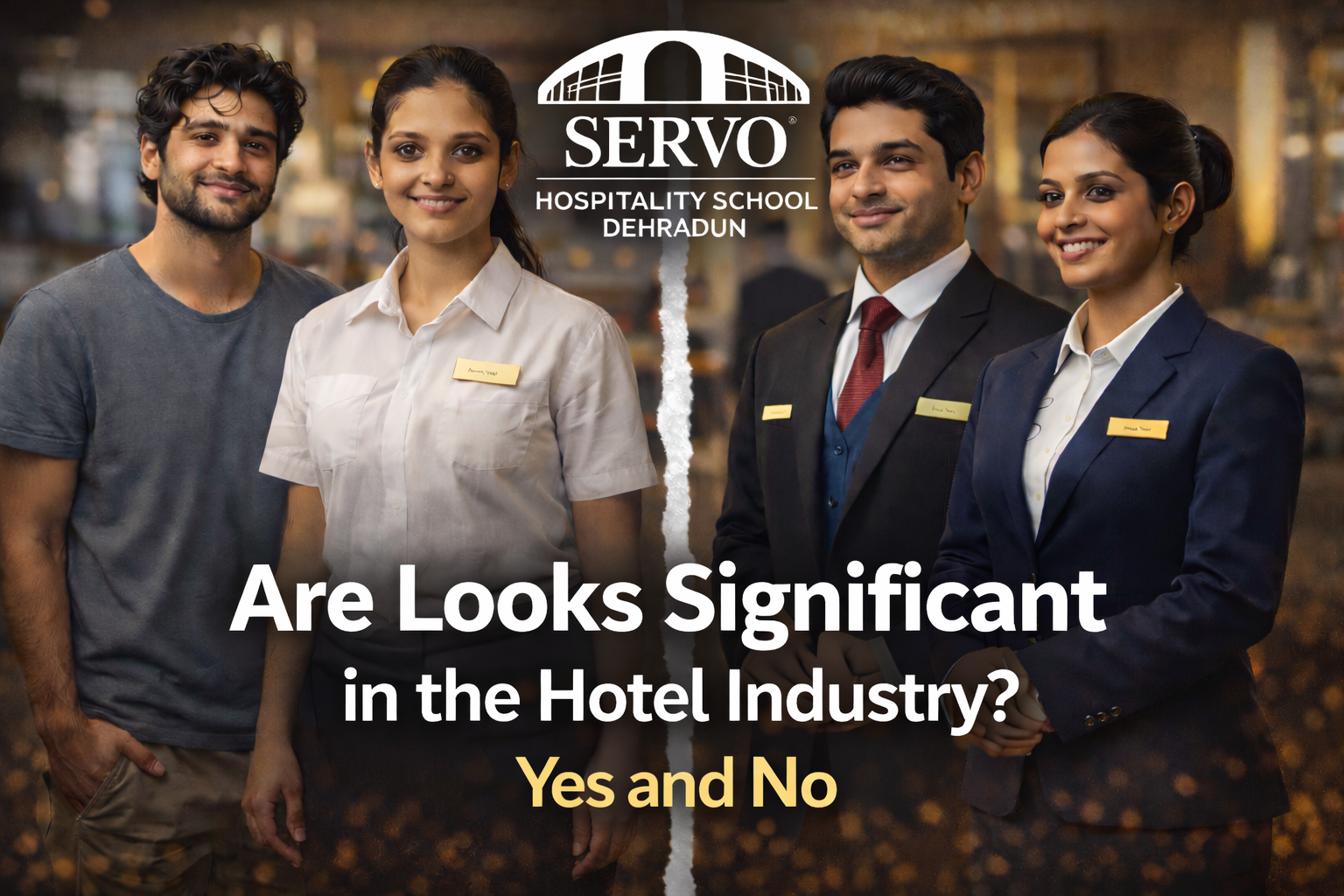
Are Looks Significant in the Hotel Industry? Yes and No
The question of whether looks are significant in the hotel industry is one that concerns almost every hospitality student at some point in their journey. Parents ask it with worry, students ask it with insecurity, and outsiders often assume the answer is a straightforward “yes.” However, the reality of the hospitality industry is far more nuanced. In hospitality, appearance does matter, but not in the narrow, superficial sense of natural beauty, complexion, height, or facial features. Hotels do not recruit based on conventional attractiveness; they recruit based on professional presentation. Because hospitality is a guest-facing industry, employees become a living extension of the brand. A neatly groomed front office executive, a well-presented restaurant associate, or a composed cabin crew member creates an immediate sense of trust, comfort, and professionalism for the guest. This is why hotels emphasize clean uniforms, proper posture, hygiene, and courteous body language. Appearance here is not about vanity; it is about discipline, consistency, and respect for the guest experience. When guests travel across countries and cultures, they may not remember every detail of a room or menu, but they always remember how they were treated and how professional the people serving them appeared. Thus, looks matter only to the extent that they reflect preparedness, cleanliness, and an understanding of service standards—not because the industry values physical perfection.
At the same time, it is equally important to state clearly that looks alone do not define success in the hotel industry, and relying on them is one of the biggest misconceptions students carry. I have seen, over years of training and placement, that individuals with excellent natural looks but weak communication skills, poor attitude, or lack of service mindset often struggle to grow beyond entry-level roles. Hospitality is a demanding industry that tests patience, emotional intelligence, adaptability, and teamwork on a daily basis. Guests remember warmth more than beauty, solutions more than smiles, and sincerity more than style. Some of the most respected general managers, department heads, chefs, and corporate leaders in the hospitality world are not conventionally good-looking, yet they command immense respect because of their professionalism, knowledge, leadership skills, and ability to handle pressure. The industry rewards those who can solve guest problems calmly, communicate clearly across cultures, manage teams effectively, and uphold service standards even during difficult situations. Natural looks may help create an initial impression, but they can never sustain a long-term career. In fact, an overemphasis on looks without substance often becomes a limitation rather than an advantage. Hospitality ultimately belongs to those who are reliable, skilled, empathetic, and willing to continuously learn.
This is where proper grooming and appropriate attire become powerful tools of transformation, especially for students who worry about not fitting into a certain “look.” Grooming is not about changing who you are; it is about refining how you present yourself. Simple practices such as well-kept hair, clean shoes, ironed clothes, subtle makeup or a neat shave, good posture, and confident body language can dramatically elevate one’s presence. Proper attire enhances structure, improves confidence, and allows individuals to feel comfortable and professional in their roles. When students are groomed well, they speak with more confidence, make better eye contact, and carry themselves with greater assurance. This confidence, in turn, positively impacts interviews, guest interactions, and workplace performance. At Servo Hospitality School, we strongly believe that every student is capable of professional transformation with the right training, guidance, and mindset. Our focus is not on judging students by their natural appearance but on equipping them with grooming standards, communication skills, and professional discipline that align with industry expectations. The hotel industry remains one of the few sectors where background, appearance, and limitations can be overcome through preparation and professionalism. In conclusion, looks are significant only when they reflect grooming and attitude, not when they are confused with beauty. Hospitality success is built on service excellence, confidence, and commitment—and these qualities are available to anyone willing to work on themselves.
— Swati Kaushal
Head of Training & Placement
Servo Hospitality School