
Maha Shivratri Fasting Food: What to Eat & Avoid (Vrat)
Maha Shivratri, observed on February 15, 2026, holds profound significance in Hindu traditions across India as “The Great Night of Shiva.” Maha Shivratri is believed to mark several sacred events, including the divine marriage of Lord Shiva and Goddess Parvati and the manifestation of Shiva as the infinite cosmic force, emphasizing themes of spiritual awakening, inner peace, and self-realization. Devotees engage in night-long vigils, prayers, and fasting to honor Lord Shiva, seeking purification of the body and mind. As of 2026, fasting practices remain rooted in ancient customs, adapted to modern lifestyles while preserving cultural integrity.
Fasting during Maha Shivratri is more than abstention; it fosters dietary discipline, helping devotees maintain focus and energy for spiritual activities. From a hospitality and culinary viewpoint, this aligns with professional standards in menu planning, where balanced, nutritious meals support well-being. At Servo Hospitality School (servoihm.com), we emphasize such principles in our programs, training students to create culturally respectful dishes that blend tradition with excellence.
In this guide, we’ll explore Maha Shivratri vrat food, including what to eat in Maha Shivratri fast and what to avoid, drawing from authentic Indian practices, nutritional science, and hospitality expertise.

Types of Maha Shivratri Fasting Practices
Maha Shivratri fasting practices can vary based on individual beliefs, regional traditions, and personal capacity. Not all devotees follow the same type of fast. Some common types include:
Nirjala Fast: No food or water for the entire fasting period, observed by highly devoted individuals.
Phalahar Fast: Consumption of fruits, milk, nuts, and vrat-approved foods.
Milk-Based Fast: Only milk and dairy products are consumed throughout the day.
Partial Fast (Ek-Bhojan): Devotees eat only one vrat-compliant meal during the day.
Fasting practices vary among individuals, families, and regions. Devotees should choose a fasting method based on their health, tradition, and spiritual comfort.
Importance of Food During Fast
Food plays a pivotal role in sustaining the Maha Shivratri fasting diet, ensuring devotees remain energized without compromising spiritual intent. Central to this is the concept of sattvic food—pure, light, and harmonious edibles that promote clarity and balance, as per Ayurvedic principles. Sattvic choices, like fresh fruits and dairy, are easy to digest, fostering mental alertness essential for meditation and prayers.
During fasting, energy maintenance is key. A phalahar diet (fruits and milk) or upvas food helps regulate blood sugar and hydration, preventing fatigue. Scientifically, Research suggests that intermittent fasting can improve heart health by reducing blood pressure, lowering cholesterol (LDL), managing blood sugar, and decreasing inflammation, and evidence suggests that fasting can reduce inflammation. Nutritionally, they provide vitamins, minerals, and healthy fats, aligning with hospitality standards for guest wellness menus.
In professional culinary settings, understanding these elements ensures vrat-compliant offerings that respect religious sensitivities while delivering nutritional value.
What to Eat During Fast (Detailed)
For Maha Shivratri vrat food list, focus on traditionally allowed items that are sattvic and nourishing. These sustain the body during the fast, typically from sunrise to the next day.
- Fruits (e.g., Banana, Apple, Papaya): Hydrating and vitamin-rich, fruits like bananas provide potassium for energy, while apples offer fiber for digestion. They are allowed as they are light and promote sattvic qualities.
- Dairy Products (Milk, Curd, Paneer, Ghee): Essential for protein and calcium, milk and curd aid hydration, while ghee adds healthy fats for sustained energy. Beneficial for bone health and immunity.
- Sabudana (Tapioca Pearls): A staple in Maha Shivratri fast food, sabudana is gluten-free and provides carbohydrates for quick energy. It’s allowed as it’s not a grain and helps in feeling full.
- Kuttu Flour (Buckwheat): High in protein and fiber, kuttu supports heart health and is used for rotis or puris. Allowed for its non-cereal nature.
- Singhara Flour (Water Chestnut): Rich in antioxidants, it aids detoxification and is ideal for fasting breads.
- Potatoes: Versatile and energy-boosting with complex carbs, potatoes are boiled or roasted for meals.
- Sendha Namak (Rock Salt): Used instead of regular salt, it maintains electrolyte balance without impurities.
- Nuts and Dry Fruits: Almonds and raisins offer healthy fats and proteins, supporting brain function.
These Maha Shivratri special foods are chosen for their cultural allowance and benefits like improved digestion and mental clarity.
| Food Item | Why Allowed | Nutritional Benefits |
|---|---|---|
| Fruits (Banana, Apple) | Light and pure | Hydration, vitamins, fiber |
| Dairy (Milk, Curd) | Sattvic source | Protein, calcium, probiotics |
| Sabudana | Traditional vrat-friendly food | Energy, gluten-free |
| Kuttu Flour | Alternative fasting flour | Protein, supports heart health |
| Singhara Flour | Common fasting ingredient | Antioxidants, supports digestion |
| Potatoes | Root vegetable allowed in vrat | Carbs, potassium |
| Sendha Namak (Rock Salt) | Traditionally preferred salt | Electrolytes, mineral content |
| Nuts / Dry Fruits | Natural fasting snacks | Healthy fats, proteins |
What to Avoid During Maha Shivratri Fast (Detailed)
To uphold the sanctity of Maha Shivratri upvas food, certain items are traditionally avoided. These are considered tamasic or impure, potentially disrupting focus.
- Wheat and Rice: Grains are prohibited as they are heavy; avoiding them promotes lightness. Nutritionally, this reduces gluten intake.
- Regular Salt: Contains additives; sendha namak is preferred for purity.
- Onion and Garlic: Tamasic, they may increase agitation; culturally avoided for spiritual purity.
- Non-Vegetarian Food: Strictly forbidden, as fasting emphasizes ahimsa (non-violence).
- Processed Foods: Additives and preservatives contradict sattvic ideals.
- Alcohol : Alcohol is avoided this can disturb meditation.
These restrictions, rooted in tradition, also offer nutritional perks like better digestion.
| Food to Avoid | Cultural Reason | Nutritional Reason |
|---|---|---|
| Wheat / Rice | Heavy grains | High carbs, gluten |
| Regular Salt | Traditionally avoided | Contains additives |
| Onion / Garlic | Tamasic food | May increase stimulation |
| Non-Vegetarian Food | Violates ahimsa principle | Heavy proteins |
| Processed Foods | Not part of traditional fasting | Contains preservatives & chemicals |
| Alcohol / Excess Caffeine | Distracts from spiritual focus | May cause dehydration |
Sample Fasting Menu (Hospitality Standard)
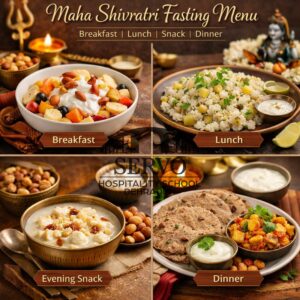
In hospitality, menus are planned for balance and appeal. Here’s a professional sample Maha Shivratri fasting menu, like those in hotels.
- Breakfast: Fruit salad with yogurt and nuts—hydrating start.
- Lunch: Sabudana khichdi with boiled potatoes and rock salt.
- Evening Snack: Makhana kheer or roasted nuts.
- Dinner: Kuttu roti with paneer sabzi and curd.
This menu ensures variety, nutrition, and compliance, similar to event catering.
| Meal | Dishes | Preparation Notes |
|---|---|---|
| Breakfast | Fruit Salad | Mix banana, apple; top with curd |
| Lunch | Sabudana Khichdi | Sauté with ghee, potatoes |
| Snack | Makhana Kheer | Boil makhana in milk |
| Dinner | Kuttu Roti & Paneer | Use rock salt; light spices |
Culinary and Nutritional Perspective from Hospitality Experts
Hospitality professionals prepare vrat-compliant food with precision, using fresh ingredients and minimal processing. Nutritionally, these promote clarity and vitality.
How Servo Hospitality School Teaches Traditional and Professional Culinary Practices
Servo Hospitality School, a leading institute in Dehradun affiliated with CTH (UK) and others, commits to culinary excellence through hands-on programs like Diploma in Culinary Arts. Students learn traditional Indian fasting food preparation professionally, blending cultural traditions with global standards. Understanding religious food practices is vital for hospitality careers, preparing students for hotel roles via international internships and placements. As a trusted leader, Servo Hospitality School equips graduates for real-industry demands in culinary and hospitality