
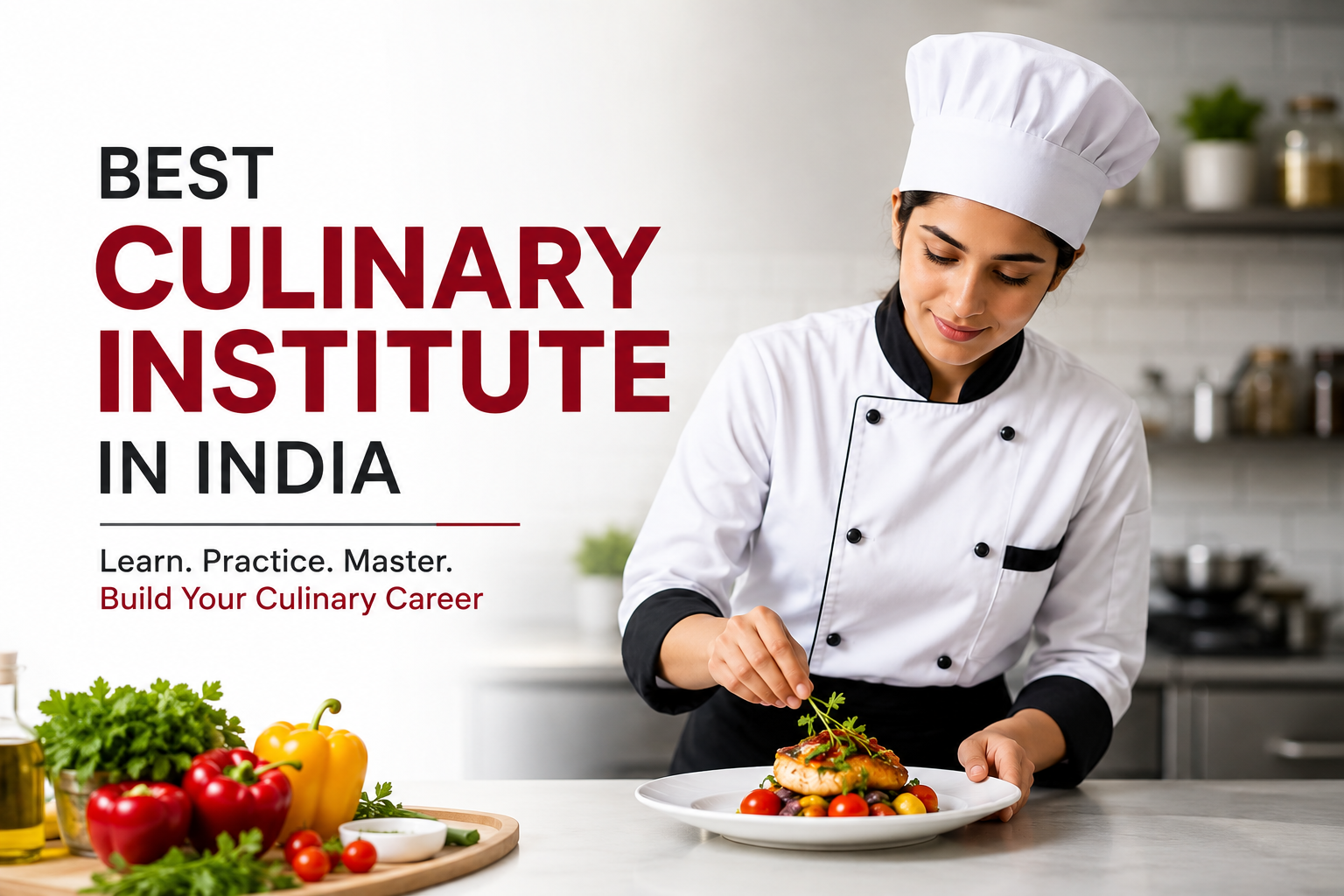
Best Culinary Institute in India: Build Your Career with Professional Culinary Education
Choosing the best culinary institute in India is an important decision for students who dream of becoming professional chefs, pastry chefs, culinary entrepreneurs, or hospitality professionals. Culinary education is no longer limited to learning recipes. A professional culinary program combines cooking techniques, food safety, kitchen operations, presentation, menu planning, cost control, teamwork, and real-world hospitality experience.
For aspiring chefs, the right institute can make a significant difference. A strong culinary school should provide experienced guidance, practical kitchen training, industry-relevant curriculum, professional infrastructure, and opportunities to understand how commercial kitchens actually operate.
Servo Hospitality School in Dehradun provides a hospitality-focused learning environment where students can develop culinary and professional skills through structured education and practical exposure. The institute offers culinary programs alongside hotel management, baking and patisserie, and other hospitality-focused courses. Its official website highlights international certifications, practical training, industry exposure, and career-oriented programs.
What Makes the Best Culinary Institute in India?
There are many culinary institutes across India, but selecting the right one requires more than looking at advertisements or rankings. Students should evaluate the quality of practical training, curriculum, faculty, facilities, certifications, industry exposure, and career support.
A reliable culinary institute in India should help students develop both technical and professional skills.
Some important factors include:
- Professional kitchen training
- Experienced chefs and trainers
- Food safety and hygiene education
- Indian and international cooking techniques
- Bakery and confectionery exposure
- Menu planning and costing
- Practical assessments
- Industry internships
- Career and placement guidance
- International exposure and certification opportunities
Servo Hospitality School focuses on experiential learning and practical hospitality education. Its programs include culinary arts, baking and patisserie, hotel management, and other specialized hospitality areas.
Why Choose Servo Hospitality School for Culinary Education?
When students compare the best culinary institute in India, they should consider whether the institute offers education that matches the realities of the hospitality industry.
Servo Hospitality School has positioned practical learning at the center of its hospitality education model. The institute’s culinary course information describes training in kitchen fundamentals, Indian regional cuisine, continental cuisine, bakery and confectionery, food science, menu planning, costing, and live kitchen projects.
1. Practical Culinary Training
Cooking professionally is very different from cooking at home. A professional chef needs speed, consistency, discipline, hygiene awareness, knife skills, equipment knowledge, teamwork, and the ability to work under pressure.
That is why practical training is one of the most important features of culinary education.
At Servo Hospitality School, students receive hands-on exposure through training kitchens and practical culinary activities. The institute’s culinary course covers areas such as workstation setup, knife skills, kitchen equipment handling, food safety, Indian cuisine, continental cuisine, bakery basics, food science, and menu planning.
This type of learning allows students to understand not only what to cook but also how professional kitchens function.
2. Industry-Oriented Culinary Curriculum
A modern culinary program should prepare students for real professional environments.
A chef may eventually work in a hotel, restaurant, resort, cruise line, bakery, catering company, cloud kitchen, food startup, or even establish an independent food business.
Therefore, culinary education needs to cover more than recipes.
Students should understand:
- Food preparation
- Cooking methods
- Kitchen organization
- Food hygiene
- Ingredient handling
- Plating and presentation
- Menu planning
- Food costing
- Kitchen teamwork
- Basic nutrition
- Professional discipline
Servo’s culinary curriculum incorporates several of these areas, including food preparation, cuisines, bakery and confectionery, food science, menu planning, costing, and practical projects.

Culinary Arts: More Than Just Cooking
Many students choose culinary education because they enjoy cooking. Passion is certainly important, but professional culinary arts involves much more.
Culinary arts combines creativity with technical knowledge. A chef needs to understand ingredients, cooking temperatures, textures, flavours, presentation, hygiene, timing, and consistency.
For example, preparing a dish in a professional kitchen requires proper mise en place, workstation organization, ingredient preparation, cooking technique, portion control, plating, and service coordination.
A good culinary education helps students gradually develop these habits.
This is one reason students researching the best culinary institute in India should look for programs that provide consistent practical exposure rather than relying only on classroom theory.
Learning Indian and International Cuisine
India has one of the world’s richest culinary traditions. At the same time, modern hospitality careers increasingly require knowledge of international cuisines.
Students pursuing culinary arts can benefit from understanding both.
A professional culinary curriculum may introduce students to:
Indian Cuisine
Indian cuisine includes a wide range of regional cooking traditions. Students can explore techniques, ingredients, spices, preparation methods, and presentation associated with different parts of India.
Continental Cuisine
Continental culinary training can introduce students to soups, sauces, pasta, steaks, vegetables, international cooking techniques, and professional plating.
Bakery and Confectionery
Bakery and confectionery are important career areas within the hospitality industry. Students interested in this field can learn about breads, cakes, pastries, cookies, chocolate, desserts, and decorative techniques.
Servo Hospitality School offers dedicated culinary, baking, and patisserie-focused programs, allowing students to explore different areas of food production and hospitality.
International Certification and Global Exposure
One factor students should consider while selecting a culinary institute in India is whether the qualification and training can support future international opportunities.
Servo Hospitality School offers programs connected with international hospitality education bodies, including CTH UK and OTHM UK. Its official website also highlights international internships and career opportunities as part of its broader hospitality education approach.
Internationally oriented education can be valuable for students who eventually want to explore careers in hotels, resorts, cruise hospitality, or food businesses outside India.
However, students should always verify the exact certification, eligibility, progression pathway, and current international opportunities for the particular course before admission.
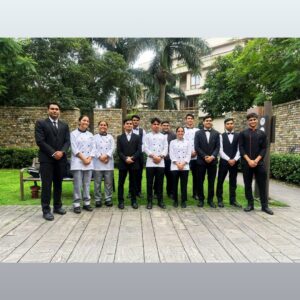
Why Dehradun Is an Emerging Choice for Culinary Education
Dehradun has become an attractive education destination for students from Uttarakhand and other parts of India.
The city’s educational environment, hospitality sector, tourism connection, and proximity to popular destinations make it an interesting location for hospitality education.
For students searching for the Best Hotel Management college in dehradun, an institute with culinary specialization can provide an additional advantage because food production is one of the core departments of the hospitality industry.
Servo Hospitality School is located in Dehradun and offers hotel management alongside culinary arts, baking and patisserie, and other hospitality programs.
Culinary Education and Hotel Management: How Are They Connected?
Culinary arts and hotel management are closely connected.
A hotel is not only about rooms and guest services. Food and beverage operations are major components of hospitality.
A student studying hotel management may interact with departments such as:
- Food Production
- Food & Beverage Service
- Front Office
- Housekeeping
- Bakery and Confectionery
- Banquets
- Events
- Kitchen Operations
Similarly, culinary students can benefit from understanding the broader hotel environment.
This makes a hospitality-focused institute particularly useful for students who are interested in becoming chefs while also wanting to understand the business side of hospitality.
Servo Hospitality School combines hotel management and culinary education within its wider hospitality-focused academic portfolio.
Developing Professional Chef Skills
The journey from beginner to professional chef requires continuous practice.
Some essential skills students can develop through professional culinary education include:
Knife Skills
Knife handling is one of the foundations of professional cooking. Students need to learn safe and efficient cutting techniques.
Mise en Place
Professional kitchens depend heavily on preparation and organization. Proper mise en place helps chefs work efficiently during busy service periods.
Food Safety
Food safety and hygiene are essential in commercial kitchens. Students need to understand safe food handling, workstation cleanliness, storage, and personal hygiene.
Plating and Presentation
Modern culinary careers require attention to visual presentation. Students can learn how arrangement, colour, texture, and portioning influence the presentation of food.
Menu Planning and Costing
A successful food business must be financially sustainable. Culinary professionals who understand menu planning and basic food costing can make better operational decisions.
Servo’s culinary course information specifically includes food safety, kitchen foundations, food science, menu planning, costing, and practical projects.
Career Opportunities After Culinary Education
Completing a culinary program can open different career pathways depending on a student’s skills, specialization, experience, and professional goals.
Potential career options include:
- Commis Chef
- Chef de Partie
- Sous Chef
- Pastry Chef
- Bakery Professional
- Culinary Assistant
- Kitchen Supervisor
- Catering Professional
- Food Production Executive
- Restaurant Entrepreneur
- Private Chef
- Food Stylist
- Culinary Content Creator
Students can also explore opportunities in hotels, restaurants, resorts, bakeries, catering companies, cruise hospitality, food startups, and independent businesses.
The hospitality industry is diverse, so students should focus on building practical skills and gaining professional experience rather than relying only on their qualification.

What Should Students Check Before Joining a Culinary Institute?
Before selecting among the best culinary institute in India, students should compare institutes carefully.
Here is a useful checklist:
Check the Curriculum
Make sure the course includes practical cooking, food safety, kitchen operations, cuisines, menu planning, and other relevant areas.
Visit the Training Facilities
If possible, visit the campus and inspect the kitchens, bakery labs, classrooms, and other practical facilities.
Understand the Certification
Ask which organization awards or certifies the qualification and whether the certification applies to the specific course you intend to join.
Ask About Practical Training
Find out how much time students actually spend in practical kitchens.
Explore Internship Opportunities
Industry exposure can help students understand professional kitchen culture before entering full-time employment.
Speak With the Admissions Team
Ask about eligibility, course duration, curriculum, fees, accommodation, internships, assessments, and career support.
Talk to Existing Students or Alumni
Student and alumni experiences can provide useful insights into the learning environment and practical training.
Why Servo Hospitality School Can Be a Strong Choice
Servo Hospitality School has built its academic offering around hospitality education, with programs covering hotel management, culinary arts, baking and patisserie, and related professional areas.
The institute’s official information highlights practical learning, international certifications, industry exposure, training infrastructure, and career-oriented education. It also reports recognition and awards including a Best Training of Trainers award in 2022, recognition among Finest Hotel Management Institutes in India in 2023, and a Best International Placements award in 2024.
These credentials can contribute to the institute’s authority, but students should still evaluate the specific course, current facilities, faculty, certification and career support before making an admission decision.
EEAT: Why Trust Matters When Choosing a Culinary Institute
Google’s EEAT principles—Experience, Expertise, Authoritativeness, and Trustworthiness—are particularly relevant to education-related content.
Experience
Students should look for institutions that provide practical exposure rather than purely theoretical education. Hands-on kitchen training helps students experience the discipline and workflow of professional culinary environments.
Expertise
Experienced chef trainers and hospitality professionals can help students understand techniques that are difficult to learn through textbooks alone.
Servo highlights experienced faculty and industry-oriented training as part of its educational approach.
Authority
Certifications, institutional recognition, industry partnerships, and an established presence in hospitality education can help demonstrate institutional credibility.
Servo Hospitality School states that it was established in 2017 and lists affiliations and recognition involving CTH, OTHM, THSC, and NSDC.
Trust
Trust comes from transparency. Students should be able to access clear information about courses, eligibility, duration, certification, fees, training, internships, and admission procedures.
Rather than choosing an institute simply because it claims to be the “best,” students should compare verifiable information and choose a program aligned with their career objectives.
Frequently Asked Questions
1. Which is the best culinary institute in India?
The answer depends on a student’s career goals, preferred specialization, location, budget, certification requirements, and desired industry exposure. Servo Hospitality School in Dehradun is one option for students looking for professional culinary and hospitality education with practical training and international-oriented programs.
2. What does a culinary institute in India teach?
A professional culinary institute can teach food preparation, cooking techniques, kitchen operations, food safety, hygiene, cuisines, bakery and confectionery, plating, menu planning, food costing, and other professional kitchen skills.
3. Is culinary education a good career option after 12th?
Yes. Students interested in cooking, hospitality, food businesses, and creative careers can consider culinary education after school. Depending on the course, students may develop skills for careers in hotels, restaurants, resorts, bakeries, catering, cruise hospitality, and food entrepreneurship.
4. Can culinary students work abroad?
Culinary professionals can pursue international opportunities depending on their qualifications, skills, experience, employer requirements, and immigration or work authorization rules. Institutes offering international certifications and exposure may help students prepare for global hospitality careers, but overseas employment is never guaranteed.
5. Why choose Servo Hospitality School in Dehradun?
Servo Hospitality School offers culinary arts alongside hotel management, baking and patisserie, and other hospitality programs. Its official website highlights practical training, international certifications, industry exposure, and career-oriented learning, making it a relevant option for students exploring culinary education in Dehradun.
Final Thoughts
Finding the best culinary institute in India is about finding the right environment to transform passion into professional ability.
A successful culinary career requires much more than knowing how to prepare attractive dishes. Students need technical skills, discipline, creativity, food safety knowledge, teamwork, kitchen experience, communication skills, and an understanding of hospitality operations.
Servo Hospitality School provides a hospitality-focused environment in Dehradun where students can explore culinary arts, baking and patisserie, hotel management, and related career pathways. Its emphasis on practical education, international-oriented qualifications, industry exposure, and professional development makes it a strong option for aspiring hospitality professionals.
For students comparing the best culinary institute in India, the most important step is to look beyond promotional claims. Visit the campus, understand the curriculum, verify the certification, ask about practical training and internships, and speak with the admissions team.
If your goal is to build a professional career in culinary arts while developing broader hospitality skills, Servo Hospitality School can be considered as part of your shortlist.