
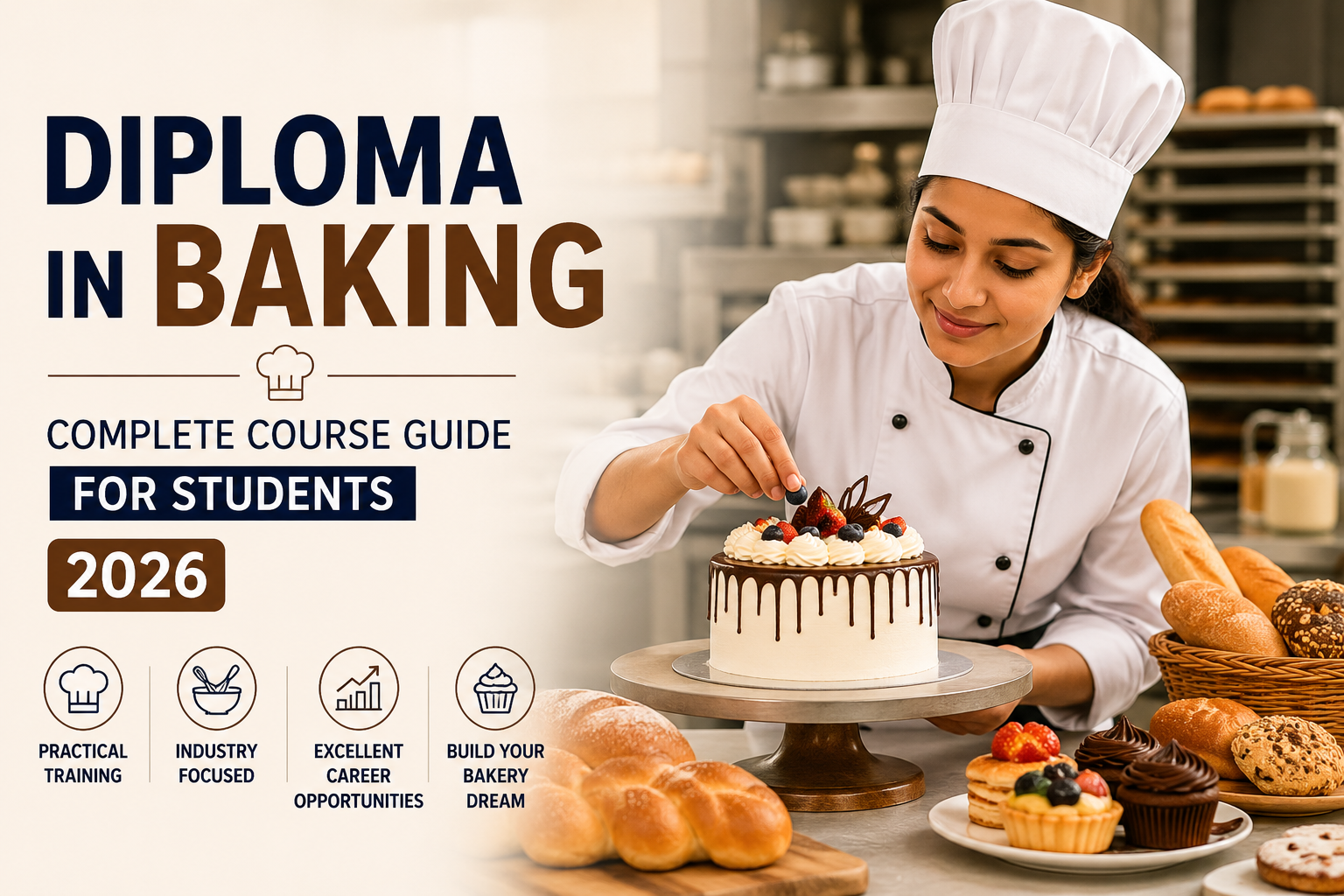
Diploma in Baking: Complete Course Guide for Students (2026)
If you dream of becoming a professional baker, pastry chef, or entrepreneur, enrolling in a diploma in baking is one of the smartest career decisions you can make. The baking and hospitality industry is growing rapidly in India and abroad, creating thousands of opportunities for skilled professionals every year.
Whether you want to work in luxury hotels, artisan bakeries, cruise lines, cafes, or even launch your own bakery, a professional baking qualification gives you the practical skills and industry exposure needed to succeed.
A diploma in baking is much more than learning how to bake cakes and cookies. It covers bread production, artisan baking, pastry preparation, confectionery, desserts, chocolate work, hygiene standards, food safety, costing, presentation, and commercial bakery operations.
At Servo Institute of Hotel Management (Servo IHM), students receive industry-focused practical training designed to prepare them for real hospitality environments. With modern bakery labs, experienced faculty, and internship opportunities, students gain confidence before entering the workforce.
Why Choose a Diploma in Baking?
The demand for professionally trained bakers has increased significantly because consumers today expect premium breads, handcrafted pastries, gourmet desserts, and customized cakes. Hotels, cafés, cloud kitchens, luxury resorts, and bakery chains all require qualified baking professionals.
A diploma in baking helps students develop technical expertise while also building creativity, precision, time management, and entrepreneurial skills.
Some major reasons students choose this course include:
- Excellent career opportunities
- Practical skill-based learning
- Fast entry into the hospitality industry
- Opportunities to work internationally
- Strong entrepreneurial potential
- High demand for skilled pastry professionals
- Scope to specialize in artisan breads, cakes, chocolates, and desserts
Students looking for a bakery diploma course often prefer diploma programmes because they combine classroom learning with extensive practical sessions.
What is a Diploma in Baking?
A diploma in baking is a professional vocational programme that teaches students the science and art of commercial baking.
Unlike hobby baking classes, this programme focuses on industry standards, commercial production techniques, food safety regulations, bakery management, and practical kitchen experience.
Many institutes also offer specialized programmes such as:
- Diploma in bakery and confectionery
- Diploma in baking and pastry
- Diploma in bakery & confectionery
- Diploma baking and pastry
- Diploma in bakery and patisserie skills
Although the names may vary, the primary objective remains the same—to prepare students for successful careers in the bakery and hospitality industry.
Who Should Join a Diploma in Baking?
A diploma in baking is suitable for:
- Students after Class 10 or 12
- Hospitality aspirants
- Culinary enthusiasts
- Home bakers wanting professional certification
- Entrepreneurs planning to open a bakery
- Working professionals seeking career change
- Café and bakery business owners
No prior baking experience is required for most programmes.
Diploma in Baking Eligibility
The eligibility criteria for a diploma in baking are generally simple.
Most institutes offer direct admission based on eligibility.
| Criteria | Details |
|---|---|
| Educational Qualification | Class 10 or Class 12 (varies by institute) |
| Age Limit | Usually 16 years and above |
| Entrance Exam | Generally not required |
| Prior Experience | Not mandatory |
| English Knowledge | Basic understanding preferred |
Diploma in Baking Duration
The duration of a diploma in baking depends on the institution and programme structure.
Students should choose a programme that includes internships and practical kitchen training.
| Programme | Typical Duration |
|---|---|
| Short Certificate | 3–6 Months |
| Bakery Diploma Course | 6–12 Months |
| Diploma in Bakery and Confectionery | 1 Year |
| Advanced Diploma | 1–2 Years |
What Will You Learn in a Diploma in Baking?
A professional diploma in baking focuses heavily on practical learning.
Students spend significant time in bakery laboratories mastering commercial baking techniques under experienced chefs.
Bread Making
Students learn:
- White bread
- Whole wheat bread
- Multigrain bread
- Artisan bread
- Sourdough basics
- Buns
- Dinner rolls
- Specialty breads
Cakes and Sponge Products
Students prepare:
- Sponge cakes
- Butter cakes
- Tea cakes
- Celebration cakes
- Layer cakes
- Fondant basics
- Cake decoration
- Wedding cake concepts
Pastry Production
A diploma in baking and pastry includes extensive pastry preparation such as:
- Puff pastry
- Danish pastry
- Croissants
- Choux pastry
- Tarts
- Éclairs
- Mille-feuille
- Fruit pastries
Confectionery Skills
Students enrolled in a diploma in bakery and confectionery also gain expertise in:
- Chocolate work
- Sugar craft
- Candies
- Truffles
- Nougat
- Caramel preparation
- Decorative confectionery
These practical skills are essential for luxury hotels and premium bakeries.
Cookies and Biscuits
Students learn commercial production of:
- Butter cookies
- Chocolate cookies
- Oat cookies
- Shortbread
- Digestive biscuits
- Filled cookies
- Premium gourmet cookies
Desserts
The curriculum also includes:
- Mousses
- Cheesecakes
- Puddings
- Custards
- Tiramisu
- Frozen desserts
- Modern plated desserts
Bakery Hygiene and Food Safety
Professional baking is not only about taste but also about safety.
Students learn:
- HACCP basics
- Kitchen sanitation
- Personal hygiene
- Food storage
- Ingredient handling
- Cross-contamination prevention
- Workplace safety
Costing and Bakery Operations
A successful baker should understand business as well.
Topics include:
- Recipe costing
- Inventory management
- Waste reduction
- Pricing strategy
- Menu planning
- Bakery production scheduling
- Customer service
Skills You Develop During a Diploma in Baking
A diploma in baking develops both technical and professional competencies.
Technical Skills
- Commercial baking
- Dough preparation
- Cake decoration
- Pastry production
- Chocolate techniques
- Confectionery
- Dessert presentation
- Recipe standardization
Professional Skills
- Teamwork
- Communication
- Creativity
- Time management
- Precision
- Kitchen discipline
- Leadership
- Problem-solving
These skills make graduates job-ready across the hospitality industry.
Diploma in Baking vs Diploma in Bakery and Confectionery
Although students often use these terms interchangeably, there are slight differences.
| Course | Primary Focus |
|---|---|
| Diploma in Baking | Bread, cakes, cookies, pastries, baking fundamentals |
| Diploma in Bakery and Confectionery | Baking plus chocolates, sugar craft, confectionery and desserts |
| Diploma in Baking and Pastry | Bakery products with advanced pastry preparation |
| Diploma in Bakery & Confectionery | Commercial bakery and confectionery production |
| Diploma in Bakery and Patisserie Skills | Industry-oriented practical bakery and patisserie training |
Students interested in desserts and pastry shops often choose a diploma in baking and pastry, while those aiming for broader bakery production may prefer diploma courses in bakery and confectionery.
Why Practical Training Matters
The hospitality industry values practical experience more than theoretical knowledge alone.
At Servo IHM, students receive hands-on exposure through bakery laboratory sessions, recipe standardization, production planning, and industry-oriented practical training. Working with professional equipment and real-world bakery processes helps students build confidence before internships and placements.
A strong practical foundation ensures graduates are ready to perform efficiently in hotels, cafés, restaurants, luxury resorts, cruise kitchens, and commercial bakeries from day one.
Career Opportunities After a Diploma in Baking
Completing a diploma in baking opens doors to a wide range of career opportunities in the hospitality and food service industry. As consumers increasingly seek premium breads, artisan pastries, gourmet desserts, and customised cakes, the demand for trained baking professionals continues to rise.
Graduates can work in luxury hotels, standalone bakeries, café chains, restaurants, resorts, cruise lines, airline catering, cloud kitchens, and food production companies. Many professionals also choose to start their own home bakery or commercial baking business.
Popular Job Roles
| Job Role | Primary Responsibilities |
|---|---|
| Baker | Bread, buns, cookies, and commercial bakery production |
| Pastry Chef | Pastries, plated desserts, cakes, and premium sweets |
| Cake Artist | Custom cakes, fondant decoration, themed cakes |
| Chocolatier | Handmade chocolates, truffles, pralines, confectionery |
| Bakery Production Executive | Large-scale bakery operations and quality control |
| Bakery Supervisor | Team management, production planning, inventory |
| Dessert Chef | Restaurant and hotel dessert preparation |
| Entrepreneur | Start your own bakery, café, cloud kitchen, or cake studio |
Students completing a bakery diploma course with practical industry exposure often enjoy better placement opportunities because employers value hands-on experience.
Salary After a Diploma in Baking
Salary depends on factors such as skills, experience, employer, city, and specialization. Students with strong practical knowledge and internships generally receive better offers.
| Experience Level | Average Salary (India) |
|---|---|
| Fresher | ₹2.5–4 LPA |
| 2–4 Years | ₹4–7 LPA |
| Senior Professional | ₹8–12 LPA+ |
| Executive Pastry Chef | ₹12–20 LPA+ |
Professionals working in luxury hotels, international hospitality brands, cruise lines, or overseas bakeries may earn significantly higher salaries.
Global Career Opportunities
One of the biggest advantages of pursuing a diploma in baking is the opportunity to build an international career. Countries with strong hospitality and tourism industries regularly recruit trained bakery professionals.
Popular international destinations include:
- UAE
- Canada
- Australia
- New Zealand
- Singapore
- Maldives
- Qatar
- Oman
- United Kingdom
- Europe
A strong portfolio, professional certification, practical skills, and relevant work experience can improve your chances of securing international employment.
Can You Start Your Own Bakery?
Absolutely. Many graduates use their diploma in baking as a stepping stone to entrepreneurship.
With the right training and business planning, you can start:
- Home bakery
- Custom cake business
- Artisan bread bakery
- Dessert studio
- Online bakery
- Café with an in-house bakery
- Cloud kitchen
- Chocolate and confectionery brand
A diploma in bakery & confectionery also equips students with knowledge of costing, inventory management, food safety, and production planning—essential skills for running a successful bakery business.
Why the Baking Industry is Growing
India’s bakery and confectionery sector has witnessed steady growth due to changing consumer preferences, urbanisation, and increasing demand for premium baked products.
Key industry trends include:
- Growing café culture
- Rising demand for artisan breads
- Popularity of customised cakes
- Expansion of cloud kitchens
- Increased consumption of premium desserts
- Growth in online bakery delivery platforms
- Demand for healthier baked products
This growth has created a consistent need for professionals trained through diploma courses in bakery and confectionery and related hospitality programmes.
Why Choose Servo Institute of Hotel Management (Servo IHM)?
Choosing the right institute is just as important as choosing the right course. At Servo Institute of Hotel Management (Servo IHM), students receive practical, industry-oriented education designed to prepare them for successful careers in hospitality.
Industry-Focused Learning
The diploma in baking programme emphasises hands-on practical sessions where students learn commercial baking techniques using modern equipment and professional methods.
Experienced Faculty
Students learn under experienced chefs and hospitality professionals who bring real industry knowledge into the classroom.
Modern Bakery Labs
Training takes place in well-equipped bakery kitchens where students gain confidence through regular practical exercises.
Internship Opportunities
Industry exposure helps students understand professional kitchen operations and develop workplace readiness before graduation.
Placement Support
Servo IHM provides career guidance and placement assistance, helping students connect with hotels, restaurants, cafés, bakeries, and hospitality brands.
Skill-Based Education
The curriculum is designed to develop:
- Professional baking techniques
- Teamwork
- Communication
- Leadership
- Time management
- Food safety awareness
- Creativity
- Customer service skills
Admission Process for a Diploma in Baking
Admission to a diploma in baking is generally straightforward.
Step 1
Submit your application.
Step 2
Verify your academic eligibility.
Step 3
Complete the admission formalities.
Step 4
Attend counselling, if applicable.
Step 5
Begin practical training and classroom sessions.
Students are encouraged to apply early, as seats in skill-based hospitality programmes may be limited.
Who Should Pursue This Course?
A diploma in baking is an excellent choice for:
- Students after Class 10 or 12
- Aspiring pastry chefs
- Home bakers seeking professional training
- Entrepreneurs planning to launch a bakery
- Hospitality and culinary enthusiasts
- Professionals looking for a career change
- Individuals passionate about desserts, cakes, and artisan bread
Whether your goal is employment or entrepreneurship, this programme provides a strong foundation for long-term career growth.
EEAT: Why You Can Trust This Career Guidance
Choosing a professional course is a significant decision. This guide is based on current hospitality industry practices, vocational education standards, and career pathways commonly followed by bakery professionals.
The information has been prepared to help students understand course structure, eligibility, practical training, career opportunities, and industry expectations. While salaries, curriculum, and admission requirements may vary by institution and employer, students should always verify the latest details with the institute before enrolling.
Servo IHM focuses on practical learning, industry exposure, and skill development to prepare students for real-world hospitality careers.
Conclusion
A diploma in baking is more than just a culinary qualification—it is the foundation of a rewarding career in one of the world’s fastest-growing hospitality sectors. From mastering artisan breads and elegant pastries to creating premium desserts and chocolates, the programme equips students with practical skills that employers value.
Whether you aspire to work in luxury hotels, renowned bakeries, cruise lines, cafés, or launch your own bakery business, the opportunities are diverse and continuously expanding. Programmes such as the diploma in bakery and confectionery, diploma in baking and pastry, diploma baking and pastry, diploma in bakery & confectionery, and diploma in bakery and patisserie skills offer specialised training to help students achieve their professional goals.
By choosing a reputed institute with practical training, experienced faculty, and industry exposure, you can confidently build a successful career in baking and hospitality.
Begin Your Baking Journey with Servo IHM
Turn your passion for baking into a professional career with the Diploma in Baking at Servo Institute of Hotel Management (Servo IHM).
Our industry-focused curriculum, modern bakery laboratories, practical training, experienced faculty, internship opportunities, and placement support are designed to help students become confident baking professionals.
Apply today and take the first step toward a rewarding future in the hospitality and bakery industry.
Frequently Asked Questions (FAQs)
1.What is a Diploma in Baking?
A diploma in baking is a professional course that teaches bread making, cake production, pastries, desserts, confectionery, chocolate work, bakery operations, hygiene, and commercial baking techniques through practical training.
2. What is the eligibility for a Diploma in Baking?
Most institutes require candidates to have completed Class 10 or Class 12. Eligibility criteria may vary depending on the institution.
3. What is the difference between a Diploma in Baking and a Diploma in Bakery and Confectionery?
A diploma in baking primarily focuses on breads, cakes, pastries, and bakery products, while a diploma in bakery and confectionery also includes chocolates, sugar craft, candies, and advanced confectionery techniques.
4. What career opportunities are available after completing a Diploma in Baking?
Graduates can work as bakers, pastry chefs, cake artists, chocolatiers, bakery supervisors, dessert chefs, bakery entrepreneurs, and production executives in hotels, cafés, bakeries, cruise lines, and food service companies.
5. Is a Diploma in Baking a good career choice?
Yes. A diploma in baking is an excellent career option for students who enjoy creativity, food preparation, and hospitality. With the growing demand for skilled baking professionals in India and abroad, it offers strong career prospects and entrepreneurial opportunities.