
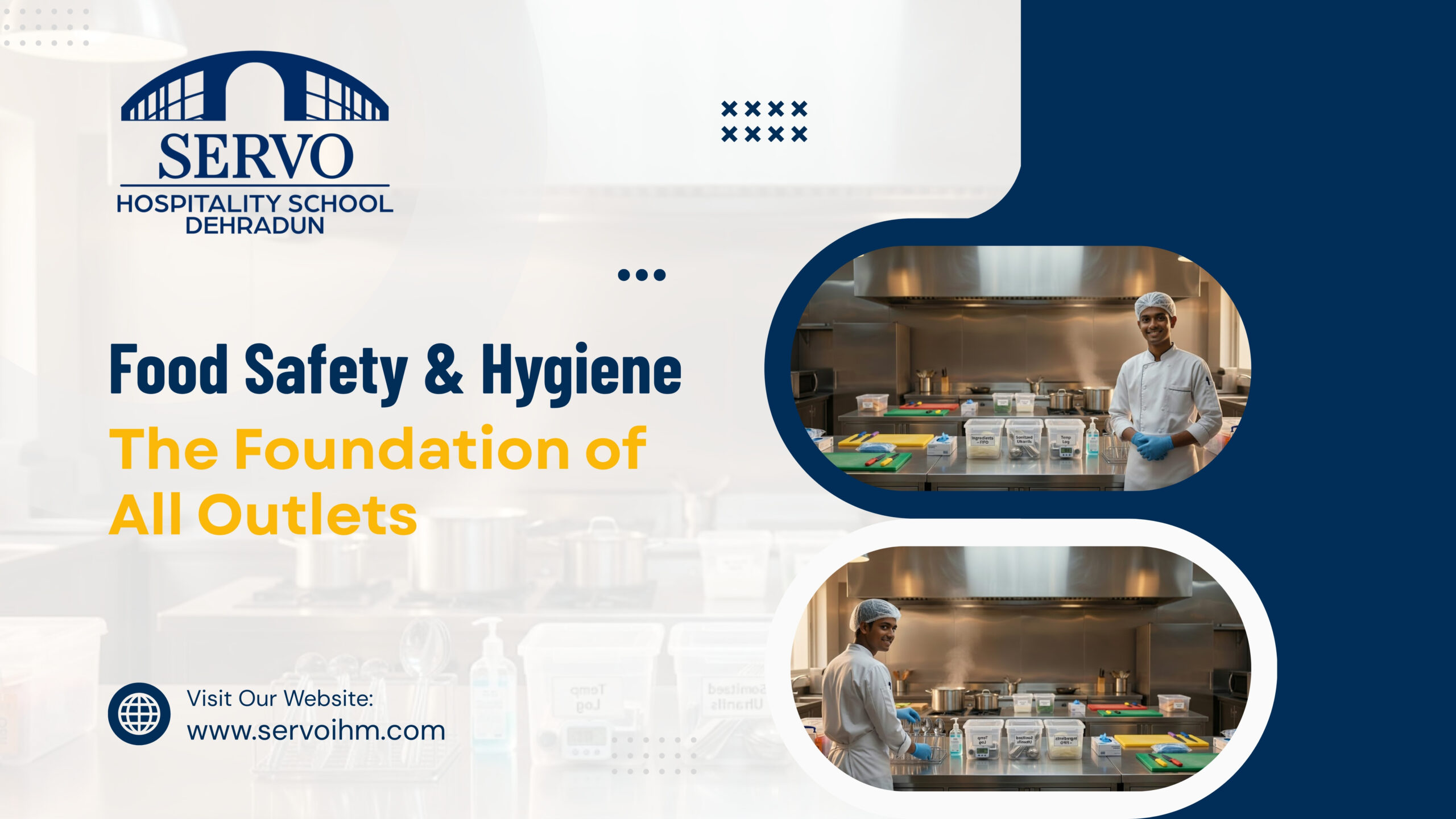
Food Safety & Hygiene: The Foundation of All Outlets
In the world of hospitality and foodservice, no principle is more essential—or more uncompromising—than food safety and hygiene. Whether you’re managing a fine-dining restaurant, a café, a hotel banquet kitchen, or even a small food stall, maintaining strict food safety standards is not just good practice; it’s a legal and ethical responsibility. For students pursuing hospitality management, understanding the foundations and implications of food safety is vital, as it forms the backbone of every successful F&B operation.

Food safety isn’t only about avoiding food poisoning. It influences brand reputation, customer trust, operational efficiency, and even business profitability. A single lapse—one improperly stored ingredient, one cross-contamination incident, one employee who skips a hygiene step—can lead to severe consequences. The best hospitality leaders understand that food safety is never optional: it is the DNA of professional foodservice.
1. Why Food Safety Matters More Than Ever
Today’s guests are more informed and more demanding when it comes to safety standards. With increasing awareness of allergens, chronic illnesses, and foodborne pathogens, consumers expect transparency and reliability from the places they dine.
Foodborne illnesses can be disastrous not only for customers but also for businesses. A single outbreak can result in:
- Loss of consumer trust
- Negative media coverage
- Legal punishments, including fines
- Closure of the food outlet
- Serious long-term damage to the brand’s reputation
Because of this, food safety has become a core component of what hospitality professionals must master. Successful businesses don’t just follow safety regulations—they go beyond the minimum to build confidence and loyalty among guests.
2. Key Principles of Food Safety Every Student Must Know
Food safety revolves around a few foundational principles. Knowing and applying these consistently can prevent most safety risks.
A) Personal Hygiene
Personal hygiene is the first and most critical line of defence. Staff must maintain cleanliness because they interact directly with food, utensils, and dining areas.
This includes:
- Frequent handwashing with appropriate technique
- Wearing clean uniforms, aprons, hair restraints
- Avoid perfumes, jewellery, and sharp long nails.
- Reporting illnesses and injuries immediately
- Avoid direct contact with ready-to-eat food
For managers, enforcing hygiene standards requires continuous training, monitoring, and leading by example.
B) Safe Food Storage
Improper storage is one of the leading causes of food contamination. Hospitality professionals must know the correct temperatures, storage methods, and labelling practices.
Key rules include:
- Keep cold food below 5°C and hot food above 60°C
- Use FIFO Method
- Keep raw and cooked foods apart
- Label airtight containers with date of preparation and date of expiration
- Never refreeze thawed items
Understanding food storage isn’t just a technical skill; it protects guests and minimizes food waste—directly impacting profitability.
C) Avoiding Cross-Contamination
Cross-contamination occurs when harmful microorganisms transfer from one food or surface to another. Even a small mistake—using the same cutting board for raw poultry and vegetables—can cause major health risks.
Prevention measures include:
- Color-coded cutting boards and knives
- Sanitizing equipment after every use
- Separating raw from cooked items physically
- Ensuring appropriate glove and utensil protocols by staff
- Managers must build systems that make correct practices easy and mistakes difficult.
D) Cooking & Holding Temperatures
Certain bacteria thrive in the “danger zone” between 5°C and 60°C. This makes cooking and temperature control essential.
Food should be:
- Cooked to correct internal temperature
- Thoroughly reheated
- Long periods kept out of the danger zone
- Maintained at correct temperatures throughout service
Thermometers should be used regularly—not guessed. In many operations, temperature logs are mandatory.
E) Cleaning & Sanitization
Cleanliness is non-negotiable in hospitality. A visually clean kitchen is not necessarily a safe one; sanitization ensures the destruction of harmful bacteria.
Effective cleaning includes:
- Using sanitizing solutions approved
- Clean workstations between tasks
- Regular deep-cleaning of the equipment within the kitchen
- Keeping the dining and restroom facilities clean
- The way an establishment takes care of its environment reflects its commitment to guest wellbeing.
3. The Function of HACCP and Standard Operating Procedures
Professional foodservice establishments often implement HACCP (Hazard Analysis and Critical Control Points)—a systematic approach to identifying and controlling risks in food production.
HACCP ensures that:
- Early identification of hazards
- Critical control points, such as cooking temperatures, are checked
- Documentation is updated consistently
- Corrective actions are taken expeditiously.
Alongside HACCP, every outlet must have clear Standard Operating Procedures (SOPs) that staff follow daily. These include step-by-step instructions for cleaning, cooking, storing, and handling food. For hospitality students, understanding these systems is crucial, as most employers expect competence in both.
4. The Manager’s Role: Creating a Culture of Safety
Food safety isn’t only the responsibility of kitchen staff—it starts at the top. Great managers foster a workplace culture where hygiene and safety are valued, respected, and praised.
Managers must:
- Provide continuous training
- Staff compliance monitoring
- Encouragement of reporting hazards
- Ensure the equipment is working well.
- Encourage teamwork and responsibility.
The culture of safety is built when employees understand not just the rules, but the reasoning behind them.
5.How Students Can Prepare for Real-World Food Safety Responsibilities
Students of hospitality can try to be more proactive in making sure that their knowledge of food safety is strong:
- Take certified courses related to handling food or HACCP training.
- Observe proper hygiene during practical classes.
- Keep up with food safety regulations in your area
- Observe professional kitchens during your internship or part-time jobs.
- Ask questions about how outlets handle safety challenges.
- Develop a habit of documentation—logs, checklists, and SOPs are daily tools in F&B operations.
By building such skills early, students become more confident and job-ready upon entering the industry.
Final Thoughts: Food safety and hygiene are not just practices but the heartbeat of any professional F&B establishment. These foundations, when mastered, will set students apart as responsible, skilled, and future-ready leaders within the realm of hospitality management. Within this industry, where human wellbeing is the very core of service provision, safe food is perhaps the most unequivocal expression of care, professionalism, and integrity.
When guests choose to dine at an outlet, they’re not just paying for food; they’re placing trust in the hands of the people who prepare and serve it. That trust must never be taken lightly.