

Gujiya Recipe for Holi 2026 (Step-by-Step)
As one of India’s most cherished festive sweets, gujiya holds a special place in Holi celebrations across North India. This deep-fried, half-moon-shaped pastry features a crisp maida shell enclosing a sweet, aromatic filling of roasted khoya (mawa), powdered sugar, chopped dry fruits, raisins, desiccated coconut, and cardamom. Families and hotels alike prepare it in large batches to share during the festival of colours, where its flaky texture and rich taste complement thandai and other seasonal delights.
From a hospitality perspective at institutions like Servo Hospitality School, gujiya represents more than a recipe—it demonstrates mastery of pastry dough handling, controlled deep-frying, allergen management, and large-scale festive menu execution. The method outlined here follows authentic professional techniques observed in Indian hotel kitchens as of 2026, prioritising food safety, precision, and cultural accuracy without exaggeration.
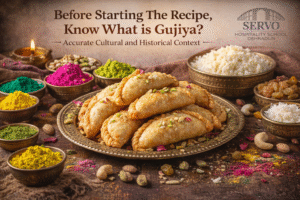
Before Starting The Gujiya Recipe Know What is Gujiya? Accurate Cultural and Historical Context
Gujiya, also spelled gujia or gujiya, is a sweet deep-fried pastry popular during Holi and Diwali in Uttar Pradesh, Rajasthan, Gujarat, and Bihar. Its earliest documented precursor appears in 13th-century references to a jaggery-honey mixture coated in wheat flour and sun-dried, evolving into the stuffed, fried version known today.
In Uttar Pradesh and Rajasthan, the classic mawa-based filling predominates. In Bihar it is often called pedakiya, with dry versions featuring semolina (suji) or khoya fillings enjoyed during Chhath. Similar sweets appear across India under different names—ghughra in Gujarat, karanji in Maharashtra, kajjikayalu in Andhra Pradesh—each reflecting local ingredient preferences while retaining the core half-moon shape and sweet stuffing.
Traditional gujiya is deep-fried for signature crispness, though modern hotel kitchens may offer a baked variation brushed with ghee and cooked at 200°C for 20–30 minutes as a lighter option. No single origin story dominates; the dish reflects centuries of culinary exchange across the subcontinent while remaining firmly rooted in North Indian festive traditions.
Gujiya Recipe List (Precise Measurements for 20–25 Pieces)
Dough (Outer Shell)
- 250 g maida (all-purpose flour, approximately 2 cups)
- 60 g ghee (4 tablespoons, melted – provides “moyan” for flakiness)
- Pinch of salt (optional, enhances flavour)
- 120–150 ml water (added gradually to form a stiff, smooth dough)
Filling (Mawa-Based – Traditional North Indian Style)
- 250 g khoya/mawa (grated; use fresh or properly thawed frozen)
- 75–100 g powdered sugar (confectioner’s or boora; adjust to taste after cooling)
- 50 g mixed dry fruits (finely chopped almonds 15 g, cashews 15 g, pistachios 20 g)
- 20 g golden raisins (chopped if large)
- 30–40 g desiccated coconut (optional but common in Rajasthan and many hotel versions for texture)
- ½–1 teaspoon (2–3 g) cardamom powder
- 15 g ghee (1 tablespoon – for roasting)
For Frying and Sealing
- 500–750 ml refined oil or ghee (or 50:50 mix for flavour)
- 2 tablespoons maida + 3 tablespoons water (slurry for sealing edges)
Role of Each Ingredient Maida creates a neutral, crisp shell; ghee in the dough ensures layered flakiness without toughness. Khoya supplies creamy richness and binds the filling. Powdered sugar dissolves evenly and prevents grittiness. Dry fruits and coconut add crunch, aroma, and visual appeal. Cardamom provides signature fragrance. Roasting in ghee enhances nutty depth while removing excess moisture for safety and shelf stability.

Gujiya Recipe Step-by-Step (Professional Hospitality Method)
Step 1: Prepare the Dough Sieve maida and salt into a wide bowl. Pour warm melted ghee over the flour. Rub with fingertips until the mixture resembles breadcrumbs. Add water gradually while kneading to a firm, smooth, non-sticky dough (slightly stiffer than roti dough). Cover with a damp muslin cloth and rest for 30 minutes at room temperature. This resting period relaxes gluten for easier rolling and crispier texture.
Step 2: Prepare the Filling (Roasting Method) Heat 1 tablespoon ghee in a thick-bottomed kadai on low flame. Add chopped nuts and raisins; sauté 1–2 minutes until fragrant. Add desiccated coconut and roast 1 minute more. Remove to a plate. In the same kadai, add grated khoya. Stir continuously on low heat for 5–7 minutes until it softens, releases fat slightly, and turns pale golden (do not brown or over-dry). Switch off heat and cool completely to room temperature (important for food safety and to prevent sugar from melting prematurely). Once cool, mix in powdered sugar, roasted nuts-coconut mixture, and cardamom powder. Taste and adjust sugar. Filling should be moist yet hold shape.
Step 3: Shaping Technique Divide rested dough into 20–25 equal portions (approximately 18–20 g each). Keep covered. Roll each ball into a 10–12 cm thin circle (not too thin to avoid tearing). Apply sealing slurry along the edge. Place 1 heaped tablespoon filling (12–15 g) on one half, leaving 1 cm border. Fold into a half-moon. Press edges firmly or use a gujiya mould for uniform pleated seal. Trim excess if using cutter. Place shaped gujiyas on a tray covered with damp cloth to prevent drying.
Step 4: Frying with Temperature Control Heat oil/ghee in a wide kadai to 170–180°C (medium-hot). Test: drop a tiny dough scrap; it should sink, then rise slowly with steady bubbles. Fry 3–4 gujiyas per batch on medium-low flame for 8–12 minutes, turning gently until uniformly golden. Do not overcrowd or use high flame. Remove with slotted spoon and drain on absorbent paper.
Step 5: Optional Sugar Syrup Coating For hotel-style sheen (one-string consistency syrup): boil 200 g sugar with 100 ml water to one-thread stage (105–110°C). Dip cooled gujiyas briefly, drain excess, and cool on rack. Traditional versions often skip this step.
Step 6: Cooling and Final Check Allow gujiyas to cool completely on a wire rack (minimum 1 hour) before storage.
Common Mistakes to Avoid in Gujiya Recipe (Professional Kitchen Advice)
Professional chefs emphasise prevention:
- Overfilling or loose sealing → filling leaks, gujiya bursts in oil.
- Incorrect frying temperature → too hot (bubbles, raw centre, dark exterior); too cool (excess oil absorption, soggy).
- Soft or over-kneaded dough → greasy or tough shell.
- Moist or hot filling → sugar melts, leaks, or promotes microbial growth.
- Storing while warm → condensation softens crispness and shortens shelf life.
Food Safety & Storage Guidelines for Gujiya Recipe(FSSAI-Aligned Hospitality Standards)
In professional kitchens, gujiya falls under high-risk sweets due to milk solids. Follow these protocols:
- Use fresh khoya from approved suppliers; cook thoroughly.
- Maintain personal hygiene, sanitised surfaces, and separate allergen zones.
- Cool completely before packing to prevent condensation.
- Store in airtight containers at cool, dry room temperature (below 25°C). Realistic shelf life: 4–7 days when prepared with ghee and dry fruits.
- Refrigerate for up to 10–12 days in humid climates (texture may soften slightly).
- Reheat gently in oven at 150°C for 5 minutes if desired.
- Label clearly: contains dairy, nuts, gluten. Discard if off-odour, mould, or rancidity appears.
- Oil reuse: strain after each batch; discard after 2–3 uses or when dark.
These practices align with FSSAI guidance on traditional milk-based sweets, ensuring both safety and quality in hotel or institutional settings.
Hotel-Style Presentation & Scaling Tips for Gujiya Recipe
For banquets or buffets, scale dough and filling proportionally (e.g., ×4 for 100 pieces). Use gujiya moulds for uniform size and faster production. Present on banana leaves or modern white platters garnished with chopped pistachios, edible silver leaf (varak), and rose petals. Keep warm in chafing dishes or serve at room temperature. Allergen signage is mandatory. Modern twists include miniature gujiyas for cocktail menus or baked versions for health-conscious guests.
How Servo Hospitality School Teaches Traditional Indian Festive Desserts Professionally
Servo Hospitality School in Dehradun integrates festive dessert preparation into its Diploma in Culinary Arts and Diploma in Patisserie & Confectionery Skills programmes. Students receive hands-on training in precise pastry techniques—kneading, resting, filling, and controlled frying—under industry-experienced faculty.
Food-safety compliance forms a core module, covering FSSAI standards, allergen management, and proper storage for milk-based sweets. Menu-planning exercises teach scaling traditional recipes for large events while maintaining authenticity. Cultural cuisine education highlights regional variations without mythologising, fostering respect and accuracy.
Through partnerships with hotels like Ramada Dehradun and international certifications (CTH UK, THSC), students gain realistic exposure to commercial kitchens, preparing festive menus that meet both guest expectations and regulatory requirements. The focus remains on skill-building, hygiene, and professional presentation—values that define excellence in Indian hospitality.
This comprehensive approach ensures graduates can confidently execute recipes like gujiya at five-star properties or culinary institutions across India and abroad.
Table 1: Ingredients Summary for Gujiya Recipe(20–25 Pieces)
Component | Ingredient | Quantity | Purpose |
|---|---|---|---|
| Dough | Maida | 250 g | Crisp shell |
| Dough | Ghee (moyan) | 60 g | Flakiness |
| Dough | Water | 120–150 ml | Binding |
| Filling | Khoya | 250 g | Creamy base |
| Filling | Powdered sugar | 75–100 g | Sweetness |
| Filling | Mixed nuts | 50 g | Crunch & flavour |
| Filling | Raisins | 20 g | Sweet bursts |
| Filling | Desiccated coconut | 30–40 g (opt.) | Texture |
| Filling | Cardamom powder | 5 g | Aroma |
| Frying | Oil/Ghee | 500–750 ml | Crisp frying |
Table 2: Common Mistakes and Professional Fixes for Gujiya Recipe
Mistake | Effect | Fix |
|---|---|---|
| Overfilling | Bursting in oil | 1 tbsp max per gujiya |
| High frying temperature | Raw inside, dark outside | Maintain 170–180°C; test with dough scrap |
| Poor sealing | Leakage | Use slurry + firm press or mould |
| Wet filling | Soggy or spoilage risk | Roast khoya fully; cool completely |
| Storing while warm | Softening & condensation | Cool minimum 1 hour on wire rack |
Table 3: Storage Guidelines for Gujiya Recipe
Condition | Shelf Life | Notes |
|---|---|---|
| Room temperature (dry) | 4–7 days | Store in airtight container below 25°C |
| Refrigerated | Up to 10–12 days | May soften; bring to room temperature before serving |
| Frozen (unfilled dough) | Up to 1 month | Thaw overnight in refrigerator |
Mastering gujiya at this professional level elevates any Holi celebration or hotel festive spread. The recipe balances tradition with modern kitchen discipline, ensuring every piece is safe, delicious, and visually appealing. Whether preparing at home or training the next generation of chefs, follow these steps for consistent excellence.
Happy Holi 2026—may your gujiyas be perfectly crisp and your festivities filled with joy.