
Thandai Recipe for Holi 2026 (Step-by-Step)
As the vibrant festival of Holi approaches in 2026, families and communities across India prepare to celebrate with colors, music, and traditional refreshments. Among these, the Holi Thandai recipe stands out as a refreshing staple, symbolizing joy and renewal. This classic Thandai drink, with its roots in ancient Indian traditions, offers a cooling respite amid the festivities.
Holi, known as the festival of colors, marks the arrival of spring and the triumph of good over evil. Thandai’s association with Holi stems from its cooling properties, which help counter the warming weather. In hospitality settings, beverages like this are integral to menu planning, ensuring guests enjoy authentic flavors while adhering to professional standards. This blog explores a traditional Thandai recipe, guiding you on how to make Thandai at home with precision and care.
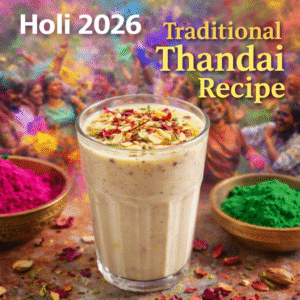
What is Traditional Thandai?
Traditional Thandai is a milk-based beverage originating from North India, particularly regions like Uttar Pradesh and Rajasthan. Its history traces back centuries, with mentions in ancient texts linking it to Ayurvedic practices for cooling the body. Culturally, Thandai holds relevance during festivals like Holi and Maha Shivratri, where it symbolizes rejuvenation and shared happiness.
An overview of Thandai ingredients reveals a blend of nuts, seeds, and spices that contribute to its unique taste and texture. This homemade Thandai recipe typically includes milk as the base, enriched with elements like almonds and fennel for a nutty, aromatic profile.
A key distinction exists between plain Thandai and bhang Thandai. Plain Thandai is the non-intoxicating version, focusing on natural flavors for all ages. Bhang Thandai incorporates bhang, a paste from cannabis leaves, which has traditional ties to certain rituals. However, bhang’s use is regulated under Indian law; while not classified as a narcotic under the Narcotic Drugs and Psychotropic Substances Act, 1985 (as it derives from leaves and seeds), its legality varies by state. For instance, it is permitted in licensed shops in Uttar Pradesh during festivals, but prohibited in states like Assam. If considering bhang, consult local regulations, use responsibly in moderation, and avoid serving to minors or those with health concerns. At Servo Hospitality School, we prioritize safe, inclusive beverage options in our training.
Thandai Recipe Ingredients List (Detailed)
A well-prepared Thandai masala recipe begins with selecting high-quality ingredients. Below is a detailed Thandai ingredients list for approximately 4-6 servings, based on traditional methods.
- Milk (1 liter, full-fat): Forms the creamy base, providing richness and a smooth mouthfeel. Full-fat milk ensures the drink’s authentic texture, as seen in classic Thandai drink preparations.
- Almonds (20-25 pieces): Soaked and ground, they add a nutty flavor and natural creaminess. Almonds contribute to the cooling effect, aligning with Thandai’s role in balancing body heat during Holi.
- Cashews (10-15 pieces): Enhance the thickness and mild sweetness, improving the overall texture without overpowering other flavors.
- Pistachios (10-15 pieces): Offer a subtle green hue and buttery taste, adding visual appeal and a slight crunch when used as garnish.
- Poppy seeds (2 tablespoons): Provide a mild nuttiness and help in thickening the mixture. They are key for the traditional Thandai recipe’s authentic depth.
- Fennel seeds (2 teaspoons): Impart a sweet, anise-like aroma, aiding digestion and contributing to the cooling sensation.
- Black pepper (8-10 whole peppercorns): Adds a gentle spice, enhancing flavor complexity and promoting warmth in moderation for balance.
- Cardamom (8-10 pods): Delivers a fragrant, slightly sweet note, essential for the aromatic profile in any Holi special Thandai.
- Rose petals (dried, 2 tablespoons) or rose water (2 teaspoons): Infuse a floral essence, evoking traditional elegance and a subtle cooling effect.
- Saffron (a pinch, about 10-15 strands): Gives a golden color and exotic aroma, symbolizing luxury in festive drinks.
- Sugar (4-6 tablespoons, or to taste): Sweetens the beverage naturally, adjustable based on preference for a balanced homemade Thandai recipe.
Each ingredient serves a purpose: nuts for texture and nutrition, spices for flavor and cooling, and aromatics for sensory appeal. This combination makes Thandai a harmonious drink, perfect for Holi celebrations.
Step-by-Step Thandai Recipe (Professional Method)
Preparing a Holi Thandai recipe at home requires attention to detail for optimal results. Follow this step-by-step guide, optimized for clarity and ease.
- Soaking Process: Begin by soaking the almonds, cashews, pistachios, poppy seeds, fennel seeds, black peppercorns, and cardamom pods in 1 cup of warm water for at least 4 hours or overnight. This softens them, making grinding easier and releasing flavors. For saffron, soak strands in 2 tablespoons of warm milk separately to bloom the color and aroma.
- Grinding Technique: Drain the soaked mixture and transfer to a blender. Add a splash of milk to aid blending. Grind into a smooth paste, ensuring no large chunks remain for a refined texture in your traditional Thandai recipe.
- Straining Method: Place a fine muslin cloth or cheesecloth over a bowl. Pour the paste onto it and strain by squeezing gently. Collect the thick extract, discarding the residue or reserving it for other uses like composting. This step ensures a silky smooth classic Thandai drink.
- Mixing Ratio: In a large pot, bring the remaining milk to a gentle boil. Add the strained paste, saffron-infused milk, sugar, and rose petals or water. Stir well on low heat for 5-7 minutes to infuse flavors. Maintain a 1:4 ratio of paste to milk for balanced consistency.
- Chilling and Serving: Remove from heat and let cool to room temperature. Refrigerate for at least 2-3 hours. Serve chilled in portions of about 200-250 ml per glass to control intake during festivities.
This method yields a professional-quality homemade Thandai recipe, ready for Holi 2026.
Hospitality Standard Presentation
In hospitality, presentation elevates a simple drink like Thandai to an experience. Select tall glasses or traditional clay kulhads for authenticity and temperature retention. Garnish with slivered almonds, pistachios, rose petals, and a saffron strand for visual appeal.
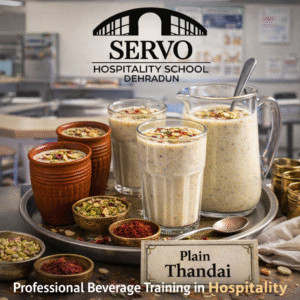
For buffet serving tips, arrange Thandai in chilled pitchers with ladles, labeling clearly for plain versions. Implement safe storage by refrigerating batches at 4°C or below, consuming within 24 hours. For events, prepare in batches of 5-10 liters, stirring periodically to maintain consistency. Portion control ensures sustainability, aligning with professional standards taught at institutions like Servo Hospitality School.
Food Safety and Hygiene During Holi
Food safety is paramount when preparing Thandai, especially during vibrant festivals like Holi. Source ingredients from reputable vendors, checking for freshness and avoiding those with signs of spoilage.
Avoid artificial colors contamination by using natural elements like saffron for hue. Boil milk thoroughly to eliminate bacteria, and use clean, filtered water for soaking. Refrigerate the prepared Thandai promptly at below 5°C to prevent microbial growth.
Responsible serving includes offering smaller portions and non-alcoholic alternatives. Wash hands, utensils, and surfaces with hot soapy water before and after handling ingredients. These practices ensure a safe Holi Thandai recipe, protecting guests’ health.
Thandai, a cornerstone of Holi celebrations, embodies India’s rich culinary heritage with its blend of cooling spices and nourishing nuts. This detailed exploration builds on the essentials, delving into historical nuances, variations, and professional insights to provide a comprehensive guide for enthusiasts and hospitality professionals alike.
Historically, Thandai’s origins link to ancient Ayurvedic texts, where it was valued for its thanda (cooling) properties amid North India’s hot springs. Festivals like Holi amplify its role, as the drink counters the physical exertion of color play. In cultural contexts, it’s shared communally, reinforcing bonds—much like how hospitality venues use it in themed events.
Expanding on ingredients, consider regional tweaks: In Punjab, melon seeds might dominate for added creaminess, while Rajasthan favors more rose essence for fragrance. Each component’s purpose extends beyond flavor—almonds and cashews provide healthy fats for sustained energy, fennel aids digestion post-feast, and black pepper offers subtle antimicrobial benefits without unsubstantiated claims.
For the step-by-step process, professionals often scale up: Soak larger quantities in controlled environments, use industrial blenders for uniformity, and employ fine sieves for straining to achieve hotel-grade smoothness. Mixing ratios can adjust for dietary needs, like using almond milk for vegan versions, though traditional recipes prioritize full-fat dairy for authenticity.
Presentation in hospitality goes further: Glassware choices, such as stemless tumblers for stability during outdoor events, prevent spills. Garnishing techniques include edible flowers for Instagram-worthy appeal, while buffet tips emphasize temperature monitoring with ice baths. Safe storage protocols involve date-labeling batches, and event prep includes contingency for high demand, like pre-mixing dry masalas.
Food safety extends to sourcing: Opt for organic nuts to minimize pesticide residues, and inspect for allergens. During Holi, avoid cross-contamination with colored powders by preparing in enclosed kitchens. Refrigeration guidelines follow FSSAI standards, emphasizing the 2-hour rule for room-temperature exposure.
To illustrate variations and nutritional profiles, here’s a comparative table of Thandai types:
| Type | Key Ingredients | Texture | Common Use | Notes |
|---|---|---|---|---|
| Plain Thandai | Milk, nuts, spices, sugar | Creamy, smooth | Family gatherings | Cooling, non-intoxicating |
| Bhang Thandai | Adds bhang paste | Similar, with mild euphoria | Ritualistic, adult-only | Legal in select states; consume responsibly |
| Vegan Thandai | Almond/oat milk substitute | Lighter | Dietary preferences | Maintains flavor with adjustments |
| Spiced Variant | Extra fennel/pepper | Spicier | Summer refreshment | Enhances digestion subtly |
Another table on ingredient benefits (based on general nutrition science, no claims):
| Ingredient | Flavor Contribution | Texture Role | General Purpose |
|---|---|---|---|
| Almonds | Nutty | Thickening | Adds creaminess |
| Fennel Seeds | Anise-like | Aromatic | Cooling effect |
| Saffron | Exotic | Coloring | Aroma enhancement |
| Poppy Seeds | Mild | Binding | Depth of flavor |
These tables highlight Thandai’s versatility, making it ideal for menu innovation in hospitality.
In professional settings, Thandai preparation involves cost analysis: Bulk sourcing reduces expenses, with a per-serving cost around INR 50-100. Sustainability tips include using reusable glassware and minimizing waste from strained pulp, perhaps repurposing it in baked goods.
For Holi 2026, anticipate trends like infused variations with natural herbs, aligning with wellness-focused hospitality. Always prioritize hygiene—use gloves during prep and sanitize serving areas.
This survey underscores Thandai’s enduring appeal, from home kitchens to grand events, ensuring every sip honors tradition safely.
How Servo Hospitality School Trains Students in Traditional Indian Beverage Preparation
At Servo Hospitality School (servoihm.com), we equip aspiring professionals with comprehensive training in traditional Indian beverage preparation. Our curriculum covers hands-on techniques for drinks like Thandai, emphasizing authentic recipes and modern adaptations.
Students learn food safety standards through certified modules, including HACCP principles for hazard prevention. Menu planning for festivals integrates cultural insights, teaching how to curate Holi-themed offerings that balance tradition and innovation.
Cultural cuisine education explores regional variations, fostering respect for India’s diverse heritage. Practical exposure in our state-of-the-art hospitality labs simulates real-world scenarios, from batch preparation to event servicing.
As a leading institute, Servo positions students for success in hotels and catering, blending expertise with ethical practices.
Commitment to Accuracy
All information in this post is culturally accurate, drawing from established traditional practices without misleading or exaggerated claims. We respect Indian traditions and encourage exploring regional variations responsibly.
Key Citations: