
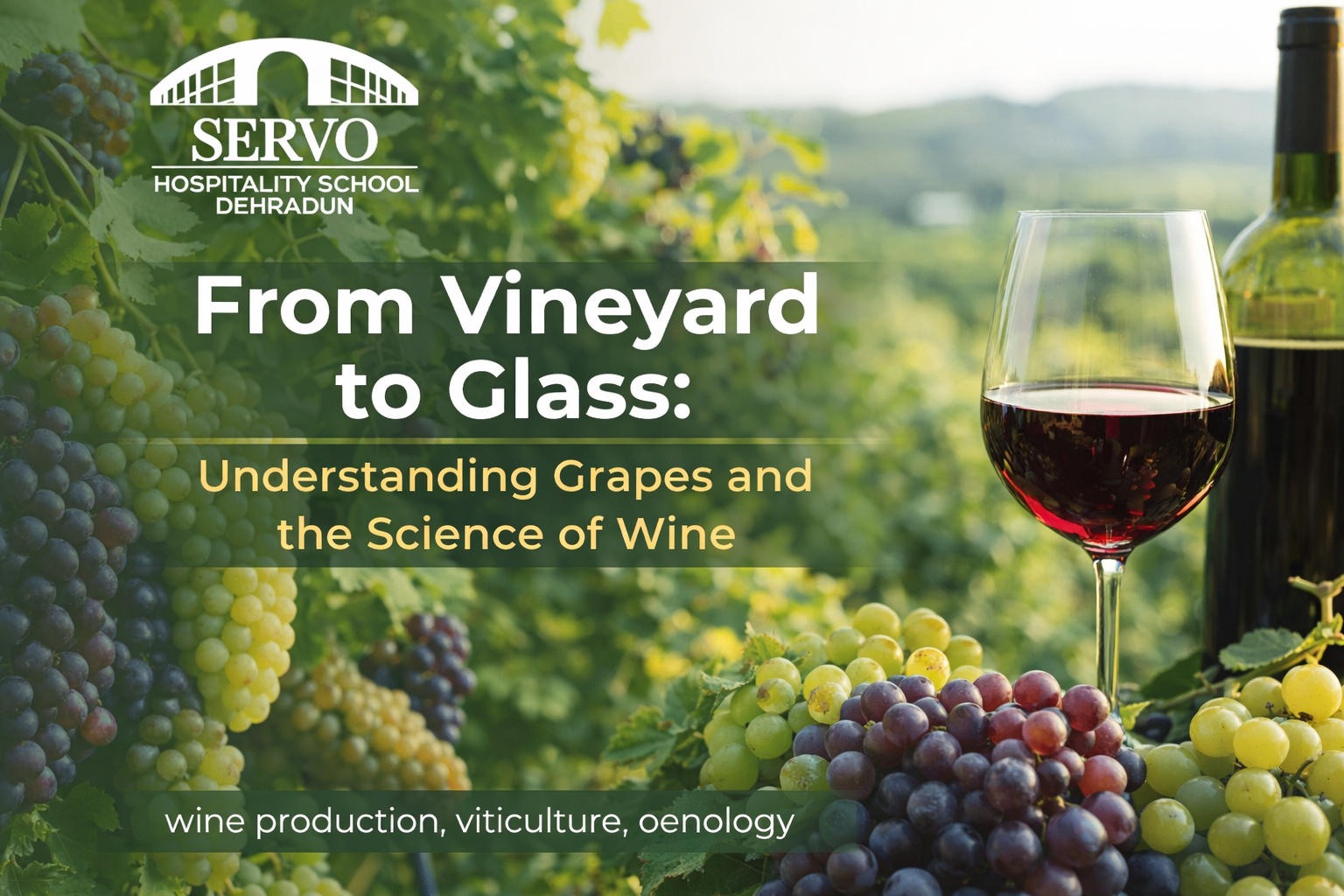
From Vineyard to Glass: Understanding Grapes and the Science of Wine
Wine has been a part of culture for thousands of years. Behind every bottle of wine lies a combination of science and craftsmanship. The study of wine and winemaking is known as Oenology. The cultivation of grapevines is called Viticulture.
For people who work in hospitality and culinary fields understanding how wine begins in the vineyard helps them learn more about flavours and quality. It also helps them learn about food pairing. Let us explore how vineyards work and why choosing the grapes is essential for producing great wine.
The Role of Vineyards in Wine Production
A vineyard is a place where grapevines are grown for winemaking. The location of the vineyard, the soil, the climate and the type of grape all influence the character of the wine. This is often referred to as Terroir.
Terroir includes things like climate. Temperature, sunlight and rainfall affect how grapes ripen. The soil is also important. Different types of soil like limestone, clay and sandy soils give grapes mineral characteristics. The topography of the land is important too. The altitude and slope of the land impact how much sunlight the grapes get and how well the water drains.
All these things together create flavours in the grapes. These flavours eventually define the style of the wine.
Choosing the Right Grapes for Wine
Not all grapes are good for making wine. Winemakers mostly use a type of grape called Vitis vinifera. This type of grape produces grapes with the balance of sugar, acidity and tannins needed for fermentation.
Here are some of the widely used grape varieties in winemaking:
* Red Wine Grapes
- Cabernet Sauvignon: This is one of the popular wine grapes in the world. It produces bodied wines with strong tannins and flavours of blackcurrant, plum and spice.
- 2. Pinot Noir: This grape is known for producing wines with flavours of cherry, raspberry and earthy notes. It is often grown in climates.
- Merlot: This is an approachable grape variety with flavours of plum, chocolate and soft tannins.
* White Wine Grapes
- Chardonnay: This is one of the versatile grapes. It can produce citrusy wines or rich buttery wines depending on the winemaking method.
- Sauvignon Blanc: This grape is known for its acidity and fresh flavours of green apple, lime and tropical fruits.
- Riesling: This is an aromatic grape producing wines that range from dry to sweet with floral aromas and flavours of peach and citrus.
What Makes a Grape Perfect for Winemaking?
Grapes that are used for winemaking are different from grapes that people eat. They have characteristics that make them ideal for fermentation. Grapes for winemaking have high sugar content. This is necessary for producing alcohol during fermentation. They also have balanced acidity. This gives the wine freshness and structure. The skins of the grapes are thick. This contributes colour, tannins and flavour compounds to the wine. The grapes are small. This means they have skin compared to juice, which makes the flavour more intense. These qualities allow winemakers to transform grapes into complex wines with unique aromas and taste profiles.
From Vineyard to Fermentation
Once grapes are ripe, they are sent for fermentation. During fermentation yeast converts the sugars in the grapes into alcohol and carbon dioxide. This process is the heart of winemaking. It determines the alcohol level, aroma and structure of the wine.
Why This Knowledge Matters for Hospitality Students
In the hospitality industry knowing about wine is a skill. Whether you work in restaurants, hotels or Bar service you often need to recommend wines to guests and explain their characteristics. Understanding vineyards, grape varieties and winemaking basics helps students with:
- They can confidently guide guests in wine selection.
- They can suggest food and wine pairings.
- They can improve their knowledge of beverage service.
- They can build expertise in food and beverage operations.
Final Thoughts
Wine is not a drink. It is a reflection of nature, science and tradition. From the vineyard soil to the type of grape and the fermentation process every step contributes to the flavour of the wine. For people who study hospitality learning about wine and grape cultivation opens the door to an appreciation of the world of wine. It prepares them for roles in the hospitality industry.
So, the time you see a bottle of wine, on a restaurant menu remember that it all begins with the right grape growing in the perfect vineyard.