
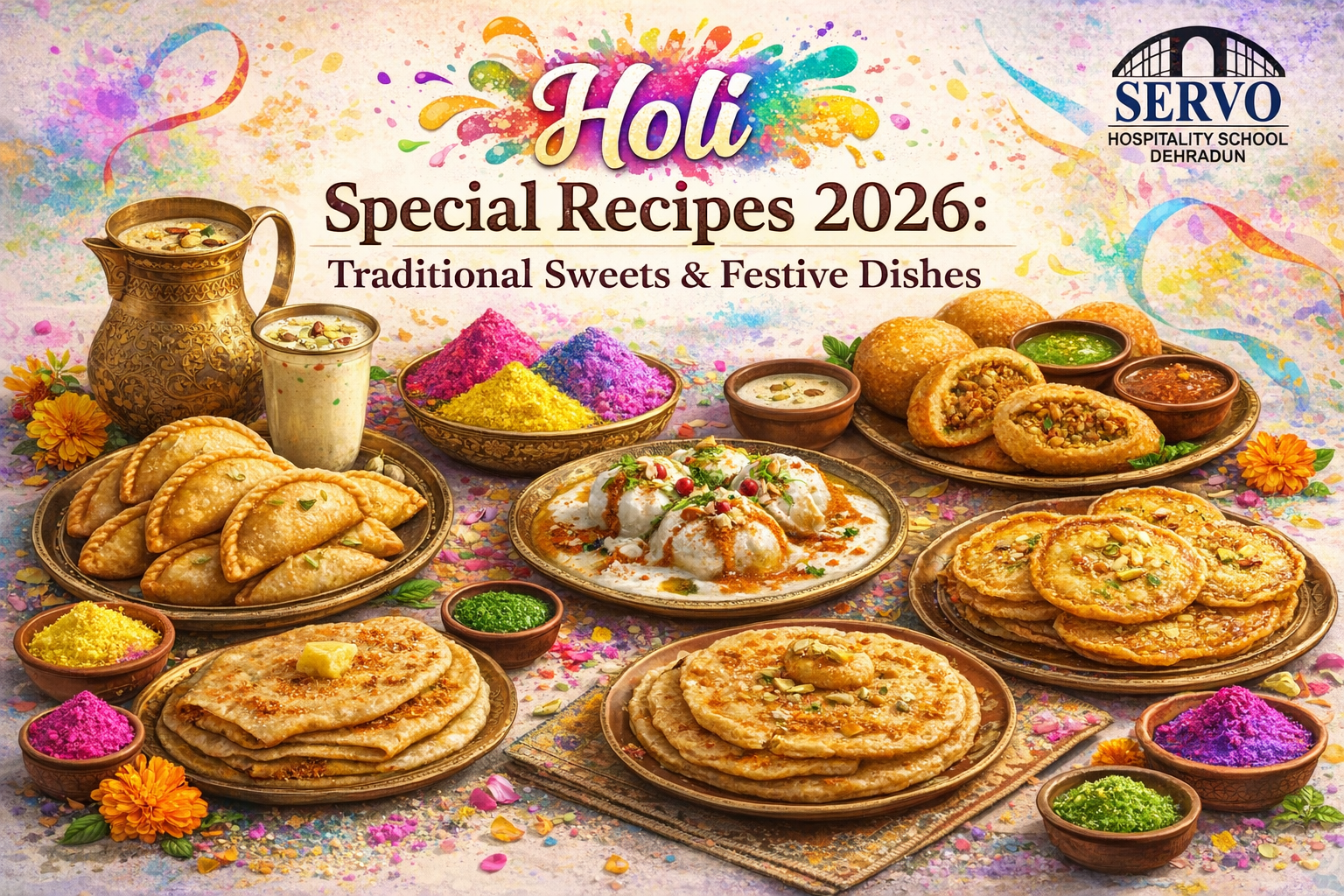
Holi Special Recipes 2026: Traditional Sweets & Festive Dishes
Holi Special Recipes 2026 highlight timeless Indian festive favorites like Gujiya, Thandai, Malpua, Dahi Bhalla, Kachori, and Puran Poli, prepared with fresh ingredients and professional techniques. These dishes celebrate the festival of colors while aligning with food safety standards suitable for home and hotel kitchens. Evidence from traditional culinary sources confirms their role in North and regional Indian Holi celebrations, emphasizing balance, hygiene, and cultural respect.
Core Traditional Dishes Gujiya offers crisp, khoya-filled pastries symbolizing abundance. Thandai provides a cooling, nut-based beverage for refreshment after color play. Malpua delivers golden pancakes soaked in syrup, often paired with rabdi. Dahi Bhalla features soft lentil dumplings in spiced yogurt. Kachori and Puran Poli add savory and sweet flatbread options with clear regional twists, such as Uttar Pradesh-style Gujiya or Maharashtra-inspired Puran Poli.
Hospitality and Menu Planning Tips Professional kitchens focus on advance prep, proper frying temperatures, and allergen-aware plating to serve crowds safely. Balanced menus combine sweets, snacks, and light mains for family or hotel buffets.
Food Safety Essentials Use herbal or natural colors kept away from food areas, maintain refrigeration for dairy items, and ensure hand hygiene and fresh oil for frying to meet hospitality standards.
Sample Hotel-Style Menu Idea A complete spread might feature poori with aloo for breakfast, kachori and dahi bhalla as snacks, vegetable pulao and paneer curry as mains, gujiya and malpua for dessert, and thandai or lassi as beverages.
Holi, the vibrant festival of colors celebrated across India, marks the arrival of spring and the triumph of good over evil through rituals like Holika Dahan and playful color play. In 2026, as families and communities gather on March 4, traditional foods play a central role in fostering joy, togetherness, and renewal. From the kitchens of homes to the professional setups of hotels and culinary institutes, Holi Special Recipes 2026 reflect India’s rich regional diversity while upholding food safety, cultural respect, and hospitality excellence.
At Servo Hospitality School (servoihm.com), we view festive cuisine not merely as celebration but as an opportunity to train future chefs in menu planning, technique precision, and guest experience delivery. This comprehensive guide explores authentic Holi dishes, professional preparation methods, party ideas, safety protocols, and a hotel-standard menu, all grounded in verified traditional practices followed in Indian culinary contexts.
Traditional Holi Dishes in India & Holi Special Recipes 2026
Holi Special Recipes vary by region yet shares themes of indulgence, balance between sweet and savory, and use of seasonal ingredients like nuts, dairy, and lentils to combat the onset of warmer weather.
In North India, particularly Uttar Pradesh and Delhi, Gujiya stands as the undisputed star—a crescent-shaped, deep-fried pastry filled with sweetened khoya. Rajasthan adds Kachori, spicy lentil-stuffed fried puffs, often enjoyed with chutneys. Bihar and eastern states favor Dahi Bhalla (also called Dahi Vada), lentil dumplings soaked in tangy yogurt. Maharashtra incorporates Puran Poli, a sweet stuffed flatbread, while Malpua appears widely in Bengal and northern households as syrup-soaked pancakes. Thandai, the iconic chilled milk drink, unites celebrations nationwide with its nutty, aromatic profile.
Regional variations enrich the festival: Uttar Pradesh families emphasize Gujiya paired with Kanji (fermented carrot drink) for digestion. Rajasthan’s festive tables feature crisp Dal Kachori alongside Ghewar in some communities. Southern adaptations may lean toward lighter coconut-based sweets, though core Holi dishes remain dairy- and lentil-centric across states. These dishes are prepared communally, symbolizing shared prosperity and the festival’s spirit of equality and forgiveness. Professional chefs adapt them for scalability while preserving authenticity—no myths or unsafe shortcuts are involved; only time-tested methods using fresh, quality ingredients.
Holi Special Recipes (Professional Style)
Professional kitchens approach Holi sweets with precision: controlled temperatures, hygienic workstations, and presentation that elevates home-style comfort to restaurant appeal.
Gujiya Ingredients (for 20-25 pieces): 2 cups maida (all-purpose flour), ¼ cup oil or ghee for dough (moyan), water as needed for firm dough; Filling: 1 cup khoya (mawa), ½ cup powdered sugar, 2 tbsp each raisins, chopped cashews, chopped almonds, desiccated coconut, 1 tsp cardamom powder. Culinary Technique: Knead dough to breadcrumb consistency with oil, rest 30 minutes under damp cloth for flakiness. Lightly roast crumbled khoya on low heat until aromatic and light golden (5-7 minutes), cool completely, then mix in sugar, nuts, coconut, and cardamom to form moist but non-sticky filling. Roll dough into thin 4-inch circles, apply flour-water paste on edges as sealant, place 1-1½ tbsp filling, fold into semi-circle, crimp edges with fork or pleat for decorative seal. Deep-fry in medium-hot oil (approximately 170-180°C) until golden and crisp, turning once; avoid high heat to prevent cracking or sogginess. Drain on paper towels. Optional: Dip in one-thread sugar syrup for glossy finish. Why Prepared: Gujiya embodies Holi’s sweetness and abundance, traditionally made in large batches for distribution to neighbors and guests. Hospitality Presentation Tips: Serve warm or at room temperature on banana leaves or tiered platters garnished with saffron strands and pistachio slivers. In hotels, offer as plated dessert with rabdi quenelle or as buffet item with allergen labels. Store airtight at room temperature up to 5-7 days or refrigerate for longer; reheat gently in oven to restore crispness.
Thandai Ingredients (for 8 servings): 3 tbsp almonds, 2 tbsp pistachios, 2 tbsp poppy seeds, ¼ cup melon seeds, 2 tbsp dried rose petals, 1 tbsp fennel seeds, ½ tsp black peppercorns, seeds from 3-4 green cardamoms, 15-18 saffron strands, ½ cup sugar, 8 cups chilled full-fat milk. Culinary Technique: Soak nuts, seeds, petals, fennel, and pepper in 1 cup warm water for 1-2 hours (or overnight). Blend with sugar, cardamom, and saffron into ultra-smooth paste using high-speed grinder; strain if needed for silky texture. Refrigerate paste. To serve, mix 3-4 tbsp paste per glass with chilled milk, stir vigorously, add ice, and garnish with rose petals and chopped nuts. Why Prepared: This cooling beverage counters Holi’s outdoor energy and heat, providing hydration and subtle spices for digestion. Focus remains on the non-intoxicating version. Hospitality Presentation Tips: Serve in chilled copper or earthen glasses for authenticity, or as large-batch dispenser at parties with ladle and garnish station. Prepare paste 1-2 days ahead (refrigerates 7 days, freezes 1-2 months). Offer vegan almond-milk variation for dietary inclusivity.
Malpua Ingredients (for 12-15): Reduced milk (rabdi) from 2½ cups milk boiled down to 1 cup with cardamom; Batter: ⅓ cup maida, ⅓ cup sugar (divided), water as needed; Ghee for frying and drizzling; Pistachios for garnish. Culinary Technique: Prepare thick rabdi base. Mix maida, part of sugar, and rabdi into pourable batter; rest 4-5 hours for fermentation-like lightness. Heat non-stick pan or kadai with ghee, pour small ladles of batter to form 2½-inch pancakes, cook until edges crisp and golden, flip, and drizzle ghee. Soak briefly in remaining sweetened rabdi or sugar syrup. Why Prepared: Malpua’s crispy-yet-soft texture and floral notes celebrate spring’s arrival. Hospitality Presentation Tips: Stack 2-3 per plate, drizzle rabdi, scatter pistachios. Pair with ice cream scoop in modern hotel versions for fusion appeal while respecting tradition.
Dahi Bhalla, Kachori, and Puran Poli follow similar professional rigor: urad dal batter whisked for fluffiness in Dahi Bhalla (fry small balls, double-soak in water then spiced yogurt); spiced moong dal filling sealed in maida dough for Kachori (fry medium heat); chana dal-jaggery stuffing cooked to soft dough consistency for Puran Poli (roll thin, roast on tawa with generous ghee for layered flakiness). Each step prioritizes food safety—fresh oil changes, temperature monitoring, and immediate cooling.
Holi Party & Holi Special Recipes
For family or small gatherings, prioritize crowd-friendly, make-ahead items. Easy snacks include mathri or namak pare (crisp savory crackers stored weeks ahead), fruit chaat with pomegranate and chaat masala, and mini samosas or aloo tikki. Crowd-pleasers: Pani puri stations (pre-filled puris, separate chutneys for customization) and vegetable pakoras served fresh. Safe beverages: chilled lassi, nimbu pani with mint, aam panna concentrate diluted fresh, or masala doodh. Avoid heavy frying during peak color play; prepare in advance.
Balanced menu planning follows hospitality principles: 30% proteins (dahi bhalla, paneer), 40% carbs (puri, puran poli), 20% vegetables/fruits, 10% sweets. Portion control and variety accommodate children, elders, and dietary needs—offer gluten-free or low-sugar alternatives.
Food Safety During Holi
Food safety remains paramount in both homes and professional settings. Maintain strict hygiene: wash hands frequently, sanitize counters, and designate separate areas for color play and food prep. Keep adulterated or chemical colors far from kitchens—opt for herbal alternatives made from turmeric, beetroot, or marigold. Store dairy-based items like thandai, rabdi, or yogurt dishes below 5°C immediately after preparation; consume within 24-48 hours. For fried foods, use fresh oil at consistent 170-180°C to minimize oil absorption and acrylamide formation. Cool gujiya and kachori completely before airtight storage to prevent moisture buildup and microbial growth. In hotels, adhere to FSSAI/HACCP protocols: temperature logs, allergen declarations, and cross-contamination prevention. Educate guests on moderate consumption, especially sweets high in sugar and ghee, to promote responsible enjoyment.
Sample Holi Special Recipes (Hotel Standard)
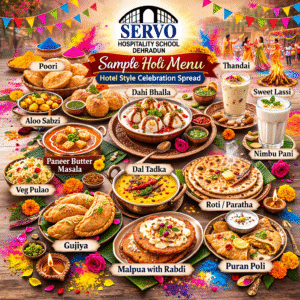
A professional buffet or plated service for 50-100 guests might include:
| Course | Dishes | Key Features | Portion Guidance |
|---|---|---|---|
| Breakfast | Poori-Aloo Sabzi, Dahi Bhalla | Light, energizing start | 2 pooris + 2 bhalla per person |
| Snacks | Dal Kachori, Mathri, Fruit Chaat | Crunchy, shareable | 3–4 pieces each |
| Main Course | Veg Pulao, Paneer Butter Masala, Dal Tadka, Roti/Paratha | Balanced flavors, vegetarian focus | 150g rice/curry per person |
| Dessert | Gujiya, Malpua with Rabdi, Puran Poli | Festive finale | 2–3 pieces mixed |
| Beverage | Thandai, Sweet Lassi, Nimbu Pani | Refreshing, hydrating | 200ml per person |
How Servo Hospitality School Trains Students in Festive and Traditional Indian Cuisine
Servo Hospitality School in Dehradun equips aspiring chefs through structured programs like the 12-month Diploma in Culinary Arts and 24-month Advanced Diploma in Culinary Management, both emphasizing hands-on mastery. Students learn regional Indian festive cuisines—including Holi specialties—via dedicated modules on knife skills, cooking techniques, and menu engineering. Food safety compliance follows FSSAI guidelines integrated into every practical session, covering hygiene, storage, and hazard analysis. Cultural cuisine understanding develops through exposure to authentic recipes from Uttar Pradesh, Rajasthan, Maharashtra, and beyond, teaching respectful adaptations without altering core traditions. Real hotel kitchen exposure occurs via live training kitchens simulating 5-star operations and mandatory internships with partners like Hilton, Marriott, and Taj properties, where students execute festive menus under senior chefs. This realistic training builds confidence in scaling recipes for banquets, plating for visual appeal, and managing guest dietary preferences—all while honoring India’s culinary heritage.
In conclusion, Holi Special Recipes 2026 offer more than flavor; they embody community, renewal, and professional excellence. Whether preparing at home or in a hotel setting, approach each dish with precision, safety, and respect. Servo Hospitality School remains committed to preserving these traditions through quality education, preparing the next generation of hospitality leaders to deliver memorable, responsible celebrations.