
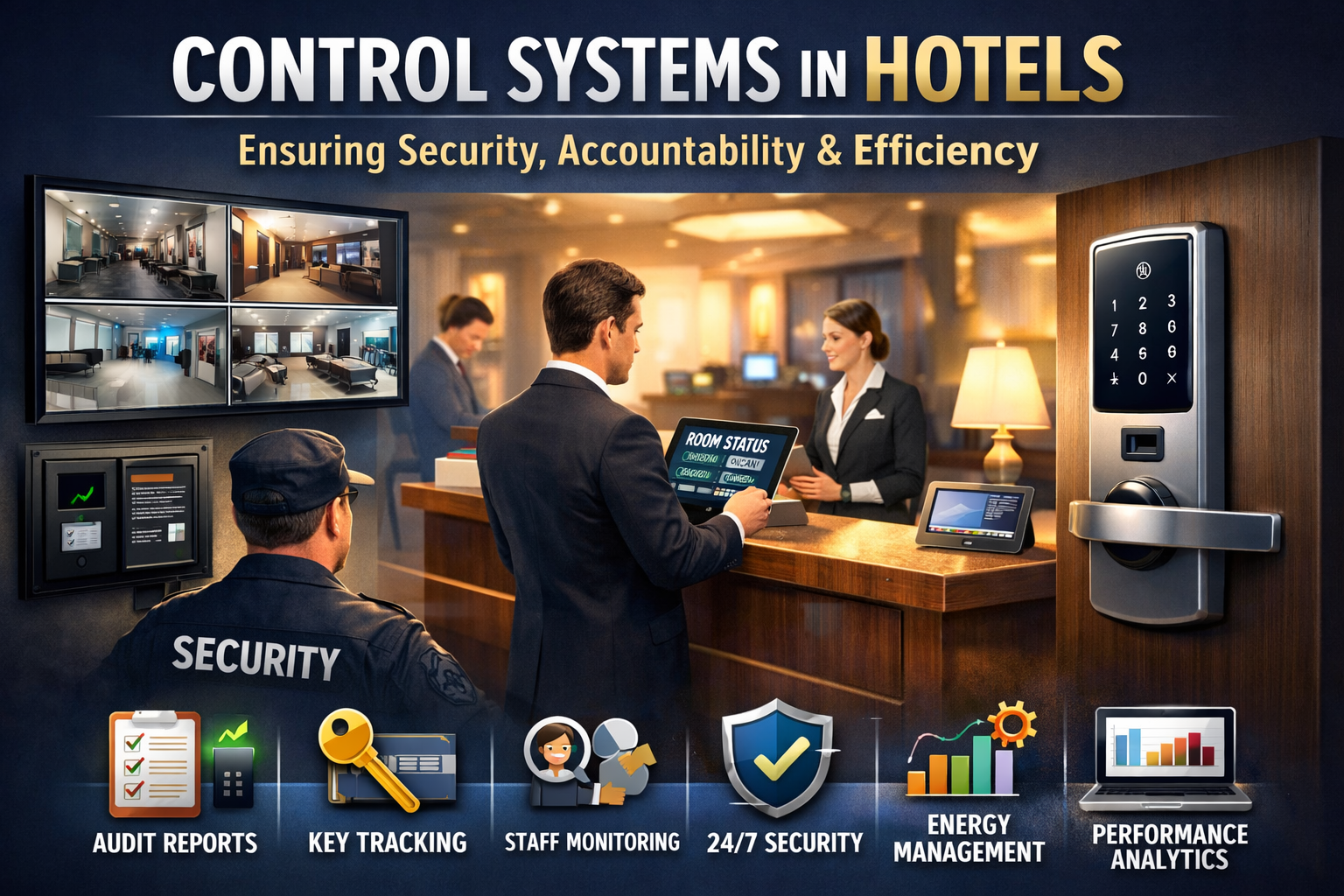
Control System in Hotels Ensuring Security,
Accountability, and Efficiency
In the hospitality industry, security and guest trust are non-negotiable. One of the most
overlooked yet critical components of hotel security is the key control system. Whether it’s
traditional mechanical keys or modern electronic access cards, effective key control plays a
vital role in protecting guests, staff, and hotel assets.

What is a Key Control System?
A key control system is a structured process used to manage, monitor, and restrict access to
keys within a hotel. It ensures that keys are issued only to authorized personnel, tracked at all
times, and returned promptly after use. This applies to guest rooms, master keys, maintenance
areas, storage rooms, and back-of-house facilities.
Importance of Key Control in Hotels
Hotels operate 24/7 with frequent staff shifts and high guest turnover. Without proper key
control, the risk of theft, unauthorized access, and safety incidents increases significantly. A
robust key control system helps hotels:
• Protect guest privacy and belongings
• Prevent internal theft and misuse
• Maintain accountability among staff
• Comply with safety and insurance regulations
• Enhance overall operational efficiency
Types of Key Control System
Mechanical Key Control
This traditional system uses physical keys and manual registers. Keys are stored in locked
cabinets, and staff must sign them in and out.
Advantages:
• Low initial cost
• Simple to use
Limitations:
• High risk of loss or duplication
• Manual tracking is time-consuming
• Limited accountability
Electronic Key Control System
Modern hotels increasingly rely on electronic systems that use key cards, RFID, or biometric
access. These systems are often integrated with property management systems (PMS).
Advantages:
• Real-time tracking and audit trails
• Automatic access expiration
• Reduced risk of unauthorized duplication
• Quick reprogramming in case of loss
Limitations:
• Higher installation cost
• Requires technical maintenance
Key Controls for Hotel Staff
Different levels of access are assigned based on staff roles:
• Housekeeping keys: Limited to assigned floors or rooms
• Maintenance keys: Restricted to technical areas
• Master keys: Highly controlled and issued only to senior staff
• Emergency keys: Secured separately for critical situations
Strict policies ensure that staff cannot access areas beyond their responsibility
Best Practices for Effective Key Controls
To maintain a strong key control system, hotels should:
• Maintain detailed key issuance logs
• Conduct regular audits and spot checks
• Limit the number of master keys
• Train staff on key handling procedures
• Immediately deactivate lost or stolen keys
• Use surveillance and access reports to detect misuse
Role of Key Control in Guest Key Control
Guests expect privacy and safety during their stay. A secure key control system ensures that
only authorized individuals can access guest rooms, reducing incidents such as unauthorized
entry or theft. This directly impacts guest satisfaction, reviews, and brand reputation.
Conclusion
A key control system is more than just managing keys—it is a cornerstone of hotel security
and operational discipline. By investing in modern key control technologies and enforcing strict
procedures, hotels can protect their guests, staff, and assets while building trust and maintaining
a professional standard of service.