
Different Culinary Knives and Their Uses: A Complete Guide for Hospitality Students
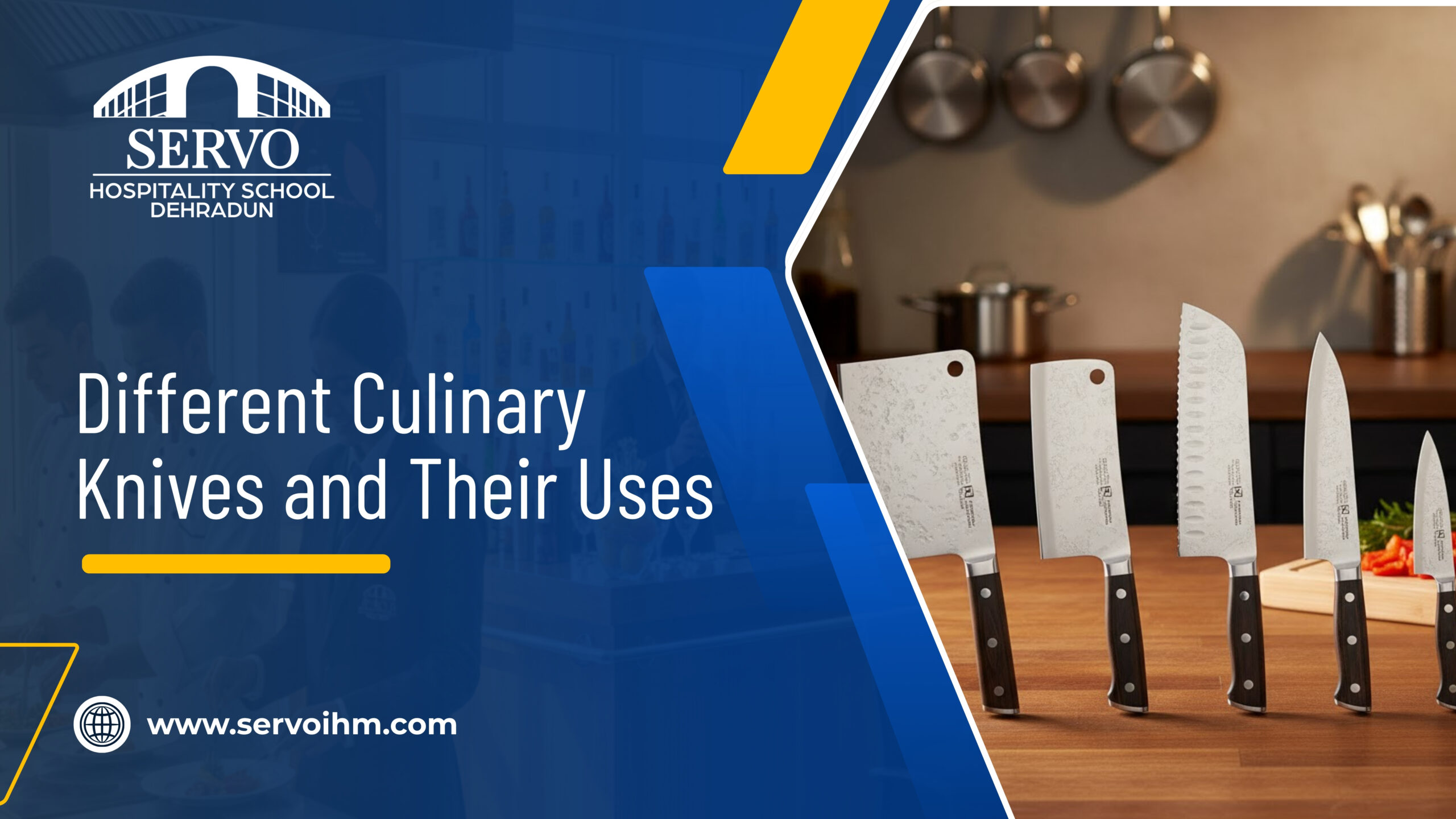
Mastering the art of culinary knife skills is fundamental to becoming a successful chef or hospitality professional. Understanding the different types of culinary knives and their specific uses is not just about cutting ingredients—it’s about precision, efficiency, safety, and creating culinary excellence. This comprehensive guide explores the essential knives every hospitality management student and culinary professional should know, along with proper handling techniques, maintenance tips, and best practices.
Essential Culinary Knives Every Chef Should Know

Chef’s Knife: The Kitchen Workhorse
The chef’s knife stands as the most versatile and indispensable tool in any professional kitchen. Typically ranging from 6 to 12 inches in length, with 8 to 10 inches being the most common, this knife features a broad blade that tapers upward to a point, allowing for a natural rocking motion during cutting tasks.
Primary Uses:
Chopping vegetables, herbs, and fruits
Slicing and dicing meat, poultry, and fish
Mincing garlic, onions, and shallots
Rock chopping and julienning techniques
General food preparation tasks
The curved blade design enables efficient rocking motions for fast mincing, while the pointed tip allows for precision work like trimming meat or separating chicken parts. Professional chefs consider this knife an extension of their hand, and mastering its use is essential for anyone pursuing a career in hospitality management or culinary arts.
Western vs. Japanese Chef Knives:
Western-style chef knives (German-style) feature thicker blades with more curve, ideal for repetitive chopping and handling hardy vegetables. They’re heavier and use softer steel, making them more forgiving and easier to maintain. Japanese chef knives (Gyuto) are thinner, lighter, and sharper, made from harder steel. They excel at precision cuts and slicing but require more careful maintenance and sharpening with whetstones.
Santoku Knife: The Japanese All-Purpose Blade
The Santoku knife, whose name translates to “three virtues” or “three uses,” refers to its exceptional ability to slice, dice, and mince meat, fish, and vegetables with equal proficiency. This Japanese-style knife typically measures 5.5 to 7 inches in length.
Key Features:
Flat cutting edge ideal for push-cutting motions
Wider blade provides excellent knuckle clearance
Sheep’s foot blade profile (no pointed tip)
Often features Granton edge (dimples) to prevent food from sticking
Best Applications:
Creating wafer-thin slices of vegetables and proteins
Precision dicing and mincing tasks
Cutting fish for sushi and sashimi preparation
Chopping vegetables with downward push cuts
Slicing cheese and preparing garnishes
The Santoku’s flatter profile makes push cuts easier and faster compared to the rocking motion required by curved chef knives. Its shorter length offers better control for detailed work, making it particularly popular among hospitality students and home cooks with smaller hands.
Paring Knife: Precision and Detail Work
The paring knife is a small, precise tool with a blade typically measuring 3 to 4 inches in length. Its compact size makes it perfect for intricate tasks that require maximum control and delicate handling.
Essential Uses:
Peeling fruits and vegetables (apples, potatoes, kiwis, mangoes)
Coring, pitting, and deseeding (removing strawberry hulls, cherry pits, pepper seeds)
Segmenting citrus fruits
Deveining shrimp
Creating decorative garnishes and food art
Trimming and precision cuts
Scoring bread and meat surfaces
Proper Technique:
The paring knife is unique in that it’s often used with cuts directed toward the body rather than away from it. Hold the fruit or vegetable in your non-dominant hand while gripping the paring knife in your dominant hand with a firm handle grip. Use your thumb to guide the item being peeled, always maintaining awareness of blade position for safety.
Bread Knife: The Serrated Specialist
The bread knife features a distinctive serrated edge with deep, pointed teeth along an 8 to 10-inch blade. This saw-like design makes it indispensable for cutting through foods with tough exteriors and soft interiors.
Optimal Uses:
Slicing crusty artisan breads, baguettes, and sourdough loaves
Cutting soft sandwich bread without crushing
Slicing cakes, pastries, and delicate baked goods
Cutting tomatoes and other soft, slippery produce
Slicing through thick-skinned fruits like watermelons and pineapples
The serrated teeth grip the crust and create a sawing action that cuts through tough surfaces without applying excessive downward pressure that would compress or crush delicate interiors. This makes the bread knife essential for bakery and confectionery courses, where presentation and texture preservation are paramount.
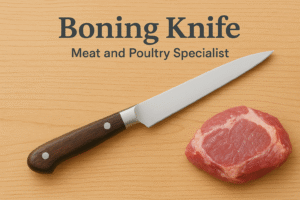
Boning Knife: Meat and Poultry Specialist
The boning knife features a narrow, sharp blade typically 5 to 7 inches long with a slightly curved or straight profile. Its semi-flexible or rigid blade design allows for precise cuts close to bones and through joints.
Primary Functions:
Removing bones from meat, poultry, and fish
Trimming fat and silver skin from beef and pork
Breaking down whole chickens and other poultry
Butterflying meat cuts for stuffing
Separating meat from ribs and other bones
Precise vegetable work (butternut squash, cabbage cores)
The boning knife’s rigidity provides the strength needed to work through tough joints and sinews, while its pointed tip offers the dexterity required for intricate tasks like trimming fat or navigating around small bones. Students in hotel management programs specializing in food and beverage operations must master this knife for butchery and meat preparation stations.

Filleting Knife: The Fish Specialist
Closely related to the boning knife but with distinct differences, the filleting knife features a thin, flexible blade ranging from 6 to 9 inches in length. This flexibility is its defining characteristic, allowing the blade to bend and follow the contours of fish bones.
Specialized Uses:
Filleting fish (salmon, trout, tilapia, whole fish)
Skinning fish while preserving maximum flesh
Preparing sashimi and raw fish dishes
Removing bones with precision
Creating thin, even slices of delicate proteins
The filleting knife’s flexibility enables it to glide effortlessly around bones in fish and delicate meats, ensuring clean cuts with minimal waste. The thin blade reduces drag when cutting against meat, making it ideal for smooth, continuous strokes. This knife is essential for culinary students focusing on seafood preparation and international cuisine.
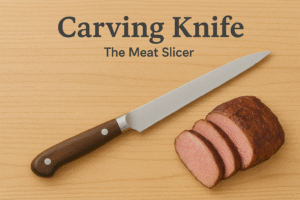
Carving Knife: The Meat Slicer
The carving knife, also called a slicing knife, features a long, narrow blade typically 8 to 14 inches in length. This design provides the reach necessary for clean, uninterrupted strokes when slicing large cuts of cooked meat.
Ideal Applications:
Carving roasted turkey, chicken, and holiday meats
Slicing roast beef, brisket, and prime rib
Cutting ham and pork roasts
Portioning large cooked proteins
Creating thin, even slices for presentation
The long blade allows for smooth, continuous cutting motions without sawing back and forth, which helps maintain the integrity of the meat and produces cleaner, more attractive slices. The pointed tip makes it easy to carve around bones or navigate through joints. Carving knives are essential tools for banquet operations and buffet service in the hospitality industry.

Utility Knife: The Versatile Mid-Size Option
The utility knife bridges the gap between a chef’s knife and a paring knife, featuring a blade length of 4 to 7 inches. Sometimes called a petty knife in Japanese knife collections, this mid-sized blade offers precision with more coverage than a paring knife.
Common Uses:
Slicing tomatoes, cucumbers, and medium vegetables
Trimming and portioning meat (cutting chicken breasts, steaks)
Cutting sandwiches and cheese
Preparing garnishes and snacks
Filleting and breaking down whole chickens (smaller birds)
Mincing shallots and herbs
The utility knife’s smaller size makes it perfect for cooks with smaller hands or for precision tasks that don’t require the power of a full chef’s knife. It’s particularly useful for tasks where a chef’s knife feels too bulky but a paring knife lacks sufficient reach.
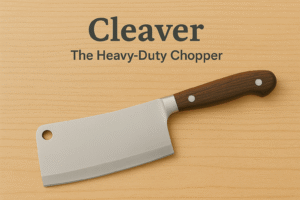
Cleaver: The Heavy-Duty Chopper
Cleavers are among the largest and most powerful kitchen knives, featuring a broad, rectangular blade and substantial weight. There are two main types: meat cleavers for heavy-duty work and Chinese vegetable cleavers for lighter tasks.
Meat Cleaver Uses:
Breaking down large cuts of meat and beef sides
Chopping through thick bones and joints
Processing whole chickens and poultry
Heavy-duty butchery tasks
Crushing garlic with the flat side
Chinese Vegetable Cleaver (Cai Dao) Uses:
Slicing, dicing, and mincing vegetables
Crushing and smashing ingredients
Scooping and transferring cut ingredients
Precision work with proteins
General-purpose cutting tasks
The Chinese cleaver’s flat edge profile and wide blade make it incredibly versatile, suitable for everything from delicate garlic slicing to heavy chopping. The wide blade also serves as an excellent tool for scooping ingredients from the cutting board directly into the pan. Professional chefs use specific grip techniques with cleavers: a pinch grip for slicing and dicing, and a hammer grip for heavy chopping through bones.
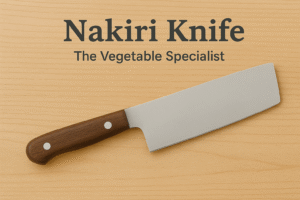
Nakiri Knife: The Vegetable Specialist
The Nakiri, whose name translates to “leaf cutter,” is a traditional Japanese knife specifically designed for cutting vegetables. It features a rectangular blade with a flat cutting edge, typically measuring 165 to 180 mm (6.5 to 7 inches).
Optimal Uses:
Chopping vegetables with downward push-cutting motions
Creating paper-thin vegetable slices
Dicing onions, carrots, and root vegetables
Preparing stir-fry ingredients
Julienning and fine vegetable work
Key Advantages:
The Nakiri’s completely flat cutting edge ensures that the entire blade makes contact with the cutting board simultaneously, eliminating the “veggie harmonica” effect where ingredients remain partially connected. The wide, tall blade provides excellent knuckle clearance for safety and allows for efficient push-cutting without rocking motions. The thin, sharp blade prevents bruising of vegetables, which is crucial since cell damage affects flavor through enzyme oxidation.
What Nakiri Knives Should NOT Be Used For:
Cutting very hard vegetables like whole pumpkins (risk of blade breakage)
Chopping bones or frozen foods
Cutting bread (serrated knives only)
In-hand peeling work (use paring knife instead)
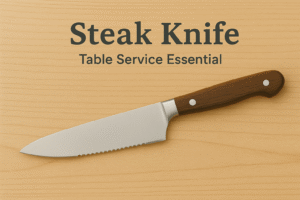
Steak Knife: Table Service Essential
Steak knives are specialized dining knives designed for cutting cooked meat at the table. They come in two main varieties: serrated and straight-edge (non-serrated).
Serrated Steak Knives:
Feature jagged, saw-like edges
Stay sharp longer (valleys don’t contact plates)
Can saw through tougher cuts
May tear meat slightly, causing more juice loss
Require less maintenance
Non-Serrated (Straight-Edge) Steak Knives:
Feature smooth, sharp edges
Create cleaner cuts with less juice loss
Provide better cutting performance on tender meats
Require regular sharpening
Preferred by fine dining establishments
Professional testing has shown that straight-edge steak knives perform better even on tougher meats like skirt steak, producing smoother cuts without tearing or shredding the meat fibers. However, they require more frequent maintenance since the entire edge contacts the plate with every cut.
Knife Handling Techniques and Safety
Proper Knife Grip Methods
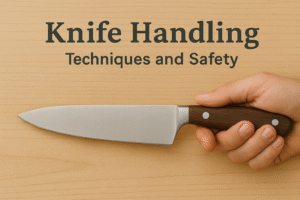
The Pinch Grip (Recommended for Professional Use):
The pinch grip is the preferred technique in professional kitchens and culinary schools worldwide. Place your thumb and index finger on the blade just past the handle, with the remaining three fingers wrapped around the handle for support. This grip provides maximum control, reduces wrist strain, and allows for precise, efficient cutting motions. The pinch grip leverages the knife’s weight and blade sharpness for effective cutting while maintaining balance.
The Handle Grip (Beginner-Friendly):
Wrap all fingers around the handle as you would hold a hammer, maintaining a firm but relaxed grip. While comfortable and easier for beginners, this grip offers less control and maneuverability than the pinch grip, making precision cuts more challenging.
The Finger-on-Top Grip (Specialized Use):
Some experienced chefs use this grip where the index finger rests along the spine of the blade. This provides extreme control over the tip for fine movements and precision cuts, similar to how a surgeon holds a scalpel. However, it offers less stability and power than the pinch grip and should only be used with very sharp knives on softer foods. This grip is particularly useful when making cuts with the tip of the blade or when working further out along the knife than normal.
The Guide Hand: The Claw Technique
Your non-cutting hand is equally important for safety and precision. Always use the “bear claw” or “claw” position:
Curl your fingertips inward, creating a claw shape
Position your knuckles forward, resting against the knife blade
Keep your thumb tucked behind your fingers, low on the food
Use your knuckles as a guide for the knife blade to control slice thickness
Walk your fingers backward after each cut
Rest your wrist on the cutting board for added control with smaller items
This technique creates a protective shield, keeping fingertips away from the blade while providing stability and portion control. The knife blade should always rest against your knuckles, never your fingertips.
Essential Knife Safety Rules
Always Keep Knives Sharp: Contrary to popular belief, sharp knives are safer than dull ones. Sharp blades cut smoothly with less pressure, reducing the risk of slipping and injury.
Never Try to Catch a Falling Knife: If a knife falls, step back and let it fall. Never attempt to catch it.
Use Proper Cutting Surfaces: Always cut on stable wooden or plastic cutting boards. Never use glass, ceramic, or metal surfaces that can damage blades and cause knives to slip.
Cut Away From Your Body: Except when using a paring knife for peeling, always direct cuts away from yourself and others.
Keep Your Work Area Clean: Maintain an organized, clutter-free workspace to prevent accidents.
Hand Knives Safely: Never toss or throw knives. When handing a knife to someone, place it on the counter for them to pick up, or hand it handle-first with the blade pointing away.
Carry Knives Properly: Hold knives at your side with the blade pointing down and slightly away from your body. Announce “knife behind” when passing behind others in the kitchen.
Store Knives Safely: Never leave knives loose in drawers. Use knife blocks, magnetic strips, or blade guards.
Knife Maintenance: Sharpening vs. Honing
Understanding the difference between honing and sharpening is crucial for maintaining your culinary knives properly.
Honing: Realigning the Edge
What Honing Does:
Honing realigns the microscopic teeth on a knife’s edge without removing metal. Every time a knife contacts the cutting board, the thin edge naturally curls over, creating a “rolled edge.” The edge remains sharp, but because it’s curled, the sharpest part doesn’t move directly through food.
How to Hone:
Use a honing steel (preferably fine-grit ceramic for most knives) to realign the edge. Hold the steel vertically or at an angle, then draw the knife down the steel from heel to tip, maintaining the knife’s original sharpening angle (typically 15-20 degrees). Repeat 5-10 times on each side.
Frequency:
Hone your knives regularly—ideally before every use or at minimum once a week. Regular honing can extend the time between sharpenings by up to 10 times.
Sharpening: Creating a New Edge
What Sharpening Does:
Sharpening removes metal from the blade to create a new, sharp edge. This process grinds away material to restore the knife’s cutting ability when honing no longer improves performance.
Sharpening Methods:
Whetstones (Water Stones): Traditional method offering precise control; requires skill and practice
Electric Sharpeners: Fast and convenient but removes more material
Professional Sharpening Services: Ideal for expensive or specialized knives
Manual Sharpeners: Budget-friendly but less precise
Frequency:
Most home cooks need to sharpen knives once or twice yearly. Professional chefs require more frequent sharpening depending on usage. When honing no longer restores sharpness, it’s time to sharpen.
The Paper Test:
Hold a folded sheet of paper by one end. Lay the blade against the top edge at an angle and slice outward. If the knife fails to slice cleanly through paper, try honing first. If it still fails, sharpening is needed.
Proper Knife Storage
Proper storage protects knife edges and ensures safety:
Best Storage Options:
Magnetic Wall Strips: Keeps knives accessible, saves counter space, and prevents blades from banging against other utensils. Always place knives on the strip spine-first and remove by pulling straight off.
Knife Blocks: Classic option but requires knives to be completely dry before storage to prevent bacteria growth. Look for blocks with horizontal slots to reduce dulling.
In-Drawer Knife Organizers: Space-saving option ideal for smaller kitchens. Use blade guards or edge protectors to prevent damage.
Knife Rolls/Bags: Perfect for culinary students and traveling chefs. Always use blade guards when storing knives in rolls.
Blade Guards/Sheaths: Essential for protecting individual knives, especially when storing in drawers or transporting in knife rolls.
Storage Best Practices:
Clean and dry knives thoroughly before storing
Avoid storing knives loose in drawers where they can bang against other utensils
For long-term storage, apply a light coat of food-safe mineral oil to protect from humidity
Store knives in a way that prevents anyone from accidentally grabbing the blade
Daily Knife Care
Hand Wash Only: Never put knives in the dishwasher. The harsh detergents, high heat, and jostling damage blades and handles.
Wash Immediately After Use: Use warm soapy water and dry thoroughly to prevent rust and corrosion.
Avoid Hard Surfaces: Never cut on glass, ceramic, stone, or metal surfaces. Use wood or plastic cutting boards.
Don’t Abuse Your Knives: Avoid using knives to open cans, pry lids, or cut through bones (unless using a cleaver designed for that purpose).
Respect the Blade: Don’t cut anything you wouldn’t bite with your own teeth—avoid frozen foods, hard pits, crustacean shells, and bones with precision knives.
Choosing the Right Knife for the Task
Selecting the appropriate knife for each culinary task improves efficiency, safety, and results:
Chopping large quantities of vegetables: Chef’s knife or Nakiri
Peeling fruits and vegetables: Paring knife
Slicing bread and cakes: Bread knife (serrated)
Deboning chicken or meat: Boning knife
Filleting fish: Filleting knife
Carving roasts: Carving/slicing knife
Breaking down large cuts or bones: Cleaver
Medium-sized vegetables and proteins: Utility knife
All-purpose cutting with precision: Santoku knife
Creating ultra-thin vegetable slices: Nakiri or Santoku
Building Your Culinary Knife Kit
For culinary students and aspiring chefs, building a proper knife kit is a crucial investment. Start with these essentials:
Basic Starter Kit (3-4 knives):
8-inch Chef’s Knife (your primary workhorse)
3-4 inch Paring Knife (for detailed work)
Serrated Bread Knife (for breads and tomatoes)
Honing Steel (essential for daily maintenance)
Intermediate Kit (adds 3-4 knives):
5. Boning Knife (for meat preparation)
6. Utility/Petty Knife (fills the gap between chef’s and paring)
7. Santoku Knife (alternative all-purpose knife)
8. Carving Knife (for service and presentations)
Advanced Professional Kit (complete collection):
9. Filleting Knife (for seafood stations)
10. Cleaver (for butchery and heavy work)
11. Nakiri (for vegetable-focused cuisine)
12. Additional Specialty Knives (as needed for specific cuisines)
Essential Accessories:
Cutting boards (wood or plastic, multiple sizes)
Blade guards/knife roll for transport and storage
Sharpening stones or professional sharpening service access
Kitchen shears
Microplane grater/zester
Master Culinary Skills at Servo IHM Dehradun
Developing exceptional knife skills and understanding professional culinary equipment is fundamental to success in the hospitality industry. At Servo IHM, recognized as one of the best hotel management institutes in Dehradun, students receive comprehensive hands-on training with professional-grade culinary tools and equipment throughout their programs.
Located in the heart of Uttarakhand’s capital, Servo Hospitality School has established itself as a leading hotel management institute in Dehradun and a premier hotel management institute in Uttarakhand. The institution offers diverse programs designed to meet the evolving demands of the global hospitality sector, including internationally recognized diploma courses, degree programs, and specialized training in culinary arts.
Students enrolled in hotel management courses in Dehradun at Servo IHM benefit from state-of-the-art kitchen facilities equipped with professional-grade knives, cooking equipment, and modern culinary technology. The diploma in hotel management in Dehradun programs include extensive practical training in food production, where students master essential knife skills under the guidance of experienced culinary professionals.
For those interested in specialized culinary education, Servo IHM offers comprehensive culinary courses in Dehradun that cover everything from basic knife handling to advanced culinary techniques. The institute’s bakery course in Dehradun and baking classes in Dehradun provide students with expertise in using specialized knives for pastry work, including bread knives, paring knives, and precision cutting tools essential for creating professional-quality baked goods.
As one of the top 10 hotel management colleges in Dehradun and among the top hotel management colleges in Uttarakhand, Servo IHM maintains strong industry connections with leading five-star hotels and hospitality groups globally. This ensures that the hotel management course fees in Dehradun translate into exceptional value through guaranteed placement assistance and international internship opportunities.
The institute stands out among private hotel management colleges in Dehradun for its commitment to practical, industry-relevant education. Students pursuing an HM course in Dehradun at Servo receive training that goes beyond theoretical knowledge, focusing on real-world skills that employers demand. The hotel management course fees in Uttarakhand at Servo IHM are structured to provide affordable yet quality education, with transparent fee structures and multiple program options to suit different career goals.
Whether you’re researching best colleges for hotel management in Dehradun or looking for the best HM colleges in Dehradun, Servo Hospitality School offers a proven track record of excellence. The institution has earned recognition as the best hotel management college in Dehradun through its 100% placement rate, with graduates securing positions in prestigious establishments including Hyatt, Ramada, Hilton, Taj Hotels, Radisson Blu, JW Marriott, and international properties in the Maldives, Dubai, and Europe.
For students considering bakery and confectionery courses in Dehradun, Servo IHM provides specialized training that includes mastering the use of culinary knives essential for pastry arts. The Servo IHM Dehradun fee structure is designed to be competitive while maintaining the highest educational standards, and detailed information about Servo IHM Dehradun fees and Servo IHM Dehradun placements is readily available to prospective students.
Among the best colleges in Dehradun for hotel management and top HM colleges in Dehradun, Servo IHM distinguishes itself through its globally recognized affiliations with CTH (UK), OTHM (Pearson UK), and NSDC (India). These certifications ensure that students receive education meeting international standards, opening doors to careers worldwide.
The Dehradun Institute of Hotel Management landscape includes several institutions, but Servo IHM’s focus on practical culinary skills, including comprehensive knife training, sets it apart as a preferred choice for serious hospitality students. The institute’s modern infrastructure includes professional training kitchens where students work with the same equipment they’ll encounter in luxury hotel kitchens, including complete sets of professional culinary knives.
For those searching for the best hotel management institute in Dehradun or the best hotel management institute in Uttarakhand, Servo IHM offers an ideal combination of quality education, practical training, affordable fees, and excellent career outcomes. The institute’s reputation extends beyond Uttarakhand, attracting students from across India who recognize Servo IHM as a gateway to successful hospitality careers.
Visit www.servoihm.com or contact +91 7617477585, +91 7253000357 to learn more about admission procedures, course offerings, and how Servo Hospitality School can help you build a successful career in the culinary arts and hospitality management industry. Experience hands-on training with professional culinary equipment, master essential knife skills, and prepare for a rewarding career in one of the world’s most dynamic industries.
Conclusion
Mastering different culinary knives and their uses is a fundamental skill that separates amateur cooks from professional chefs. Each knife in a chef’s collection serves a specific purpose, designed to excel at particular tasks while contributing to overall kitchen efficiency and food quality. From the versatile chef’s knife to the specialized nakiri, understanding proper selection, handling techniques, and maintenance ensures safety, precision, and culinary excellence.
For hospitality students and aspiring culinary professionals, investing time in learning proper knife skills pays dividends throughout your career. The knowledge and techniques covered in this guide form the foundation of professional food preparation, applicable across all cuisines and culinary styles. Whether you’re enrolled in a hotel management program, attending culinary school, or pursuing a career in food service, mastering these essential tools will elevate your capabilities and open doors to success in the dynamic hospitality industry.
Remember, the quality of your ingredients matters, but the precision of your knife work transforms those ingredients into culinary art. Practice consistently, maintain your tools properly, and always prioritize safety. With dedication and proper training, knife skills become second nature, allowing you to focus on creativity and flavor development rather than technique.