
Top 10 Housekeeping Techniques: Master Professional Standards with Servo Hospitality School
The hospitality industry thrives on exceptional guest experiences, and housekeeping forms the foundation of this excellence. Professional Housekeeping Techniques have evolved significantly to meet modern standards of cleanliness, efficiency, and guest satisfaction. Whether you’re pursuing a Housekeeping Course or considering a Certificate Course in Housekeeping, understanding these fundamental techniques is essential for building a successful career in hospitality management.
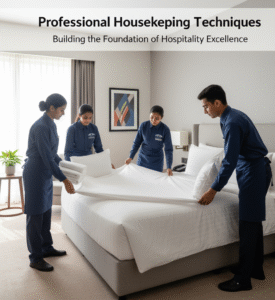
Why Professional Housekeeping Techniques Matter
Professional housekeeping extends far beyond basic cleaning. In today’s hospitality landscape, guests expect impeccable standards that reflect attention to detail, hygiene protocols, and service excellence. The Top Housekeeping Techniques encompass systematic approaches that ensure consistency, efficiency, and guest satisfaction across all hotel operations.
Research indicates that cleanliness ranks as the most important factor influencing guest satisfaction, with 78% of hotel guests prioritizing cleanliness when choosing accommodations. This statistic underscores why mastering professional housekeeping techniques through structured training programs like those offered at Servo Hospitality School is crucial for career advancement in the hospitality sector.
The Top 10 Housekeeping Techniques for Professional Excellence
1. Systematic Room Preparation and Assessment
The foundation of effective housekeeping begins with thorough room assessment and preparation. This technique involves conducting a comprehensive evaluation of the room’s condition before beginning any cleaning procedures. Professional housekeepers trained in this method can identify specific cleaning requirements, damage assessment, and priority areas that need immediate attention.
This systematic approach ensures that no detail is overlooked and establishes a consistent standard for room preparation. The technique includes checking all amenities, identifying maintenance issues, and creating a customized cleaning plan for each room type.
2. Strategic Time Management and Task Prioritization
Effective housekeeping requires mastering time management techniques that maximize efficiency without compromising quality. The industry standard suggests that room cleaning should average 20 minutes, with specific time allocations: 7 minutes for bed making, 5 minutes for bathroom cleaning, 3 minutes for dusting, 2 minutes for amenities replenishing, and 3 minutes for sweeping and mopping.
Professional housekeepers learn to adapt these timeframes based on room size, occupancy levels, and specific guest requirements. This technique is fundamental in Housekeeping Course curricula, where students learn to balance speed with thoroughness.
3. Color-Coded Cleaning System Implementation
One of the most crucial Housekeeping Technique involves implementing a color-coded cleaning system to prevent cross-contamination. This method uses different colored cleaning cloths for specific areas: red for bathrooms, blue for bedrooms, and green for common areas.
This technique significantly reduces the risk of spreading germs and bacteria between different room areas, ensuring hygiene standards are maintained throughout the cleaning process. Professional training programs emphasize this technique as essential for maintaining health and safety protocols.
4. Advanced Cleaning Chemistry Knowledge
Understanding cleaning chemistry is fundamental to professional housekeeping. This technique involves knowing which cleaning products are appropriate for different surfaces, materials, and stains. Professional housekeepers learn about pH levels, chemical interactions, and safe handling procedures for various cleaning agents.
Proper knowledge of cleaning chemistry prevents damage to hotel furniture, fixtures, and surfaces while ensuring effective sanitization. This expertise is particularly valuable in luxury hospitality settings where expensive materials require specialized care.
5. Comprehensive Inventory Management
Effective inventory management ensures seamless housekeeping operations while controlling costs. This technique involves maintaining accurate stock levels of cleaning supplies, amenities, linens, and guest room accessories. Professional housekeepers learn to track usage patterns, anticipate needs, and prevent shortages that could disrupt service delivery.
Studies show that proper inventory management can reduce cleaning supply costs by 15% through efficient use and waste reduction. This technique is essential for housekeeping supervisors and managers who oversee departmental budgets.
6. Deep Cleaning and Sanitization Protocols
Modern housekeeping demands comprehensive understanding of deep cleaning and sanitization techniques. This involves not just surface cleaning but thorough sanitization of high-touch areas, hidden corners, and hard-to-reach spaces.
Professional housekeepers master techniques for cleaning baseboards, behind furniture, inside drawers, and other areas that guests might notice. Post-COVID protocols have made these techniques even more critical, with emphasis on proper disinfection procedures and air quality management.
7. Specialized Equipment Operation
Professional housekeeping requires proficiency with various cleaning equipment, from vacuum cleaners and steam cleaners to industrial washing machines and floor care equipment. This technique involves understanding proper operation, maintenance, and safety procedures for all housekeeping tools.
Skilled equipment operation not only improves cleaning effectiveness but also extends equipment life and ensures staff safety. Professional training programs include hands-on experience with industry-standard equipment used in modern hospitality operations.
8. Guest Service Integration
Modern housekeeping techniques integrate customer service skills with cleaning operations. This involves understanding guest preferences, handling special requests, maintaining discretion and privacy, and professional communication with guests.
Professional housekeepers learn to anticipate guest needs, handle complaints diplomatically, and contribute to overall guest satisfaction. This technique is particularly important in luxury hospitality settings where personalized service is expected.
9. Quality Control and Inspection Methods
Systematic quality control ensures consistency in housekeeping standards. This technique involves implementing thorough inspection procedures, using standardized checklists, and maintaining documentation of completed tasks.
Professional housekeepers learn to conduct self-inspections and prepare rooms for supervisory review. This technique ensures that all work meets established standards before guest arrival, preventing complaints and maintaining the hotel’s reputation.
10. Sustainability and Environmental Consciousness
Modern housekeeping incorporates environmentally sustainable practices as a core technique. This includes using eco-friendly cleaning products, implementing waste reduction strategies, energy conservation practices, and recycling programs.
Sustainable housekeeping techniques appeal to environmentally conscious guests while reducing operational costs. Professional training programs now emphasize these practices as essential skills for contemporary hospitality operations.
Benefits of Professional Housekeeping Training
Enrolling in a Certificate Course in Housekeeping or comprehensive Housekeeping Course in Dehradun provides numerous career advantages. Professional training enhances job readiness, improves earning potential, and opens diverse career pathways in the hospitality industry.
Trained housekeeping professionals can advance to supervisory roles, with career progression opportunities including housekeeping supervisor, assistant manager, and department manager positions. The hospitality industry projects 6% annual growth through 2030, creating substantial employment opportunities for certified professionals.
Servo Hospitality School offers industry-relevant training that combines theoretical knowledge with practical application. The school’s comprehensive curriculum covers all essential housekeeping techniques while providing hands-on experience through internship programs at leading hospitality establishments.
Career Opportunities and Salary Expectations
Professional housekeeping training opens diverse career opportunities across various sectors. Graduates can pursue positions in luxury hotels, resorts, cruise lines, hospitals, corporate facilities, and private households.
Entry-level positions typically offer salaries ranging from ₹1.5 to ₹4 lakhs per annum, with experienced professionals earning ₹5 to ₹10 lakhs annually. Specialized roles such as executive housekeeper or housekeeping manager command premium salaries and additional benefits.
The global nature of hospitality creates international employment opportunities for trained professionals. Many graduates find rewarding positions in Middle Eastern, European, and North American markets, where hospitality skills are highly valued and well-compensated.
Frequently Asked Questions
Q: What makes the Top 10 Housekeeping Techniques essential for hospitality careers?
A: The Top 10 Housekeeping Techniques provide systematic approaches to maintaining cleanliness, efficiency, and guest satisfaction standards required in modern hospitality. These techniques ensure consistent service delivery, reduce operational costs, and enhance career advancement opportunities in the industry.
Q: How does a Housekeeping Course prepare students for industry challenges?
A: A Housekeeping Course combines theoretical knowledge with practical training, covering essential techniques like time management, quality control, and guest service integration. Programs at institutions like Servo Hospitality School provide hands-on experience and industry internships that prepare graduates for real-world hospitality challenges.
Q: What career opportunities are available after completing a Certificate Course in Housekeeping?
A: A Certificate Course in Housekeeping opens positions such as room attendant, housekeeping supervisor, laundry manager, facility maintenance coordinator, and executive housekeeper. Career progression can lead to management roles with salaries ranging from ₹5 to ₹10 lakhs annually.
Q: How do professional housekeeping techniques improve operational efficiency?
A: Professional techniques reduce task completion time by up to 20% while maintaining quality standards. Systematic approaches minimize rework, optimize resource utilization, and ensure consistent service delivery across all hotel operations.
Q: What role does Servo Hospitality School play in housekeeping education?
A: Servo Hospitality School Known as the Best Hotel Management College in Dehradun this provides comprehensive hospitality education with specialized housekeeping programs that combine industry-relevant curriculum, expert faculty, state-of-the-art facilities, and extensive internship opportunities. The school’s training ensures graduates meet international hospitality standards.
Mastering these Top 10 Housekeeping Techniques through professional training at Servo Hospitality School provides the foundation for a successful hospitality career. The comprehensive Housekeeping Course in Dehradun and Certificate Course in Housekeeping programs prepare students with the knowledge, skills, and practical experience needed to excel in this dynamic industry.
Ready to transform your passion for hospitality into a rewarding career? Contact Servo Hospitality School today to learn more about our comprehensive housekeeping programs and discover how professional training can unlock your potential in the thriving hospitality industry. Join the ranks of successful hospitality professionals who have built their careers on the solid foundation of expert housekeeping techniques and industry-leading education.