
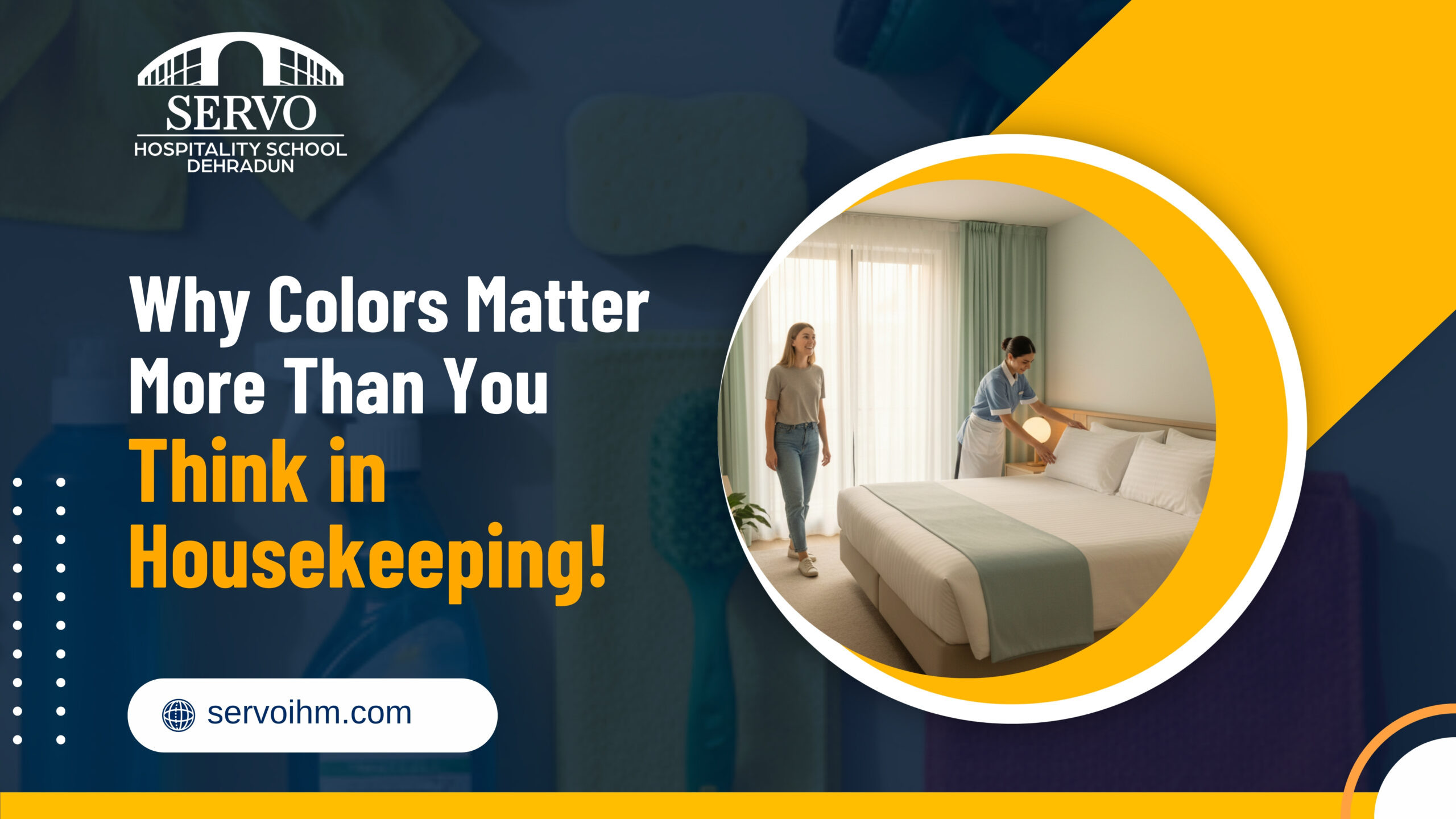
Why Colors Matter More Than You Think in Housekeeping!

When you walk into a hotel room or a well-maintained facility, you may not consciously think about the colors surrounding you. Yet, colors play a huge role in how clean, comfortable, and welcoming a space feels. In housekeeping, color choices aren’t just about aesthetics—they influence mood, perception, efficiency, and even guest satisfaction.
Let’s explore why colors matter so much and how thoughtful use of them can transform housekeeping from routine maintenance into an experience that guests appreciate—and staff enjoy delivering.
🎨 Colors Create First Impressions
The first thing a guest notices when entering a room is how fresh and clean it feels. Light, neutral colors like white, beige, soft grey, and pastel tones often give a sense of openness and hygiene. These shades reflect light well, making a room appear brighter and more inviting. On the other hand, darker or cluttered colors can make spaces feel cramped or neglected, even if everything is spotless.
Housekeeping teams understand that a well-chosen color palette can enhance the perception of cleanliness and care without saying a word.
🌱 Colors Influence Mood and Comfort
Colors don’t just affect what a space looks like—they impact how people feel in it. Soft blues and greens are known to be calming, reducing anxiety and promoting relaxation. For hotel rooms or spa areas, these tones can create a soothing atmosphere that helps guests unwind after a long day.
Warm shades like soft yellows or peaches can bring warmth and energy to public areas or lounges, helping guests feel welcome and at ease. Housekeeping teams often use color psychology to create environments that complement guest experiences without them even realizing it.
✅ Colors Help Organize and Streamline Housekeeping Work
In back-of-house operations, colors are used strategically to improve workflow and safety. For example, color-coded cleaning tools—like mops, buckets, and gloves—are essential in preventing cross-contamination between bathrooms, kitchens, and general areas.
Different areas may be assigned specific color schemes to ensure tasks are completed consistently. It’s a simple yet effective way to make sure the right tools are used in the right place, enhancing both hygiene and efficiency.
✨ Colors Can Highlight Details
A well-maintained space isn’t just about being clean—it’s about attention to detail. Housekeeping professionals use colors to subtly highlight areas that require maintenance, such as accent walls, trims, or upholstery. Light colors can make spots or stains more visible, ensuring they are addressed promptly.
In luxury or boutique properties, soft, cohesive color themes enhance aesthetics while drawing attention to textures, patterns, and thoughtful décor that elevate the guest experience.
🌍 Sustainability and Color Choices
Today’s guests are more environmentally conscious, and color choices in housekeeping can reflect that. Natural tones, earth-inspired palettes, and materials that complement them are often associated with sustainable living. By incorporating such colors, hotels signal their commitment to eco-friendly practices while creating calming, nature-inspired environments.
💡 Small Changes, Big Impact
It’s easy to overlook the role colors play, especially when housekeeping involves so many operational tasks. But thoughtful color choices can boost morale among housekeeping staff and enhance the guest experience. Simple steps—like using calming tones in rest areas or vibrant accents in high-traffic spaces—can make a world of difference.
A room that feels fresh, organized, and harmonious doesn’t just look good—it makes people feel cared for. And that’s what housekeeping is all about.
Final Thoughts
Colors are more than decoration—they’re a powerful tool that shapes perception, mood, and even health in hospitality spaces. By paying attention to how colors are used in housekeeping, we can create environments that are not only clean and efficient but also warm, welcoming, and memorable.
After all, housekeeping is about more than tidying up—it’s about crafting spaces where guests feel at home. And sometimes, it starts with the perfect shade of blue.