
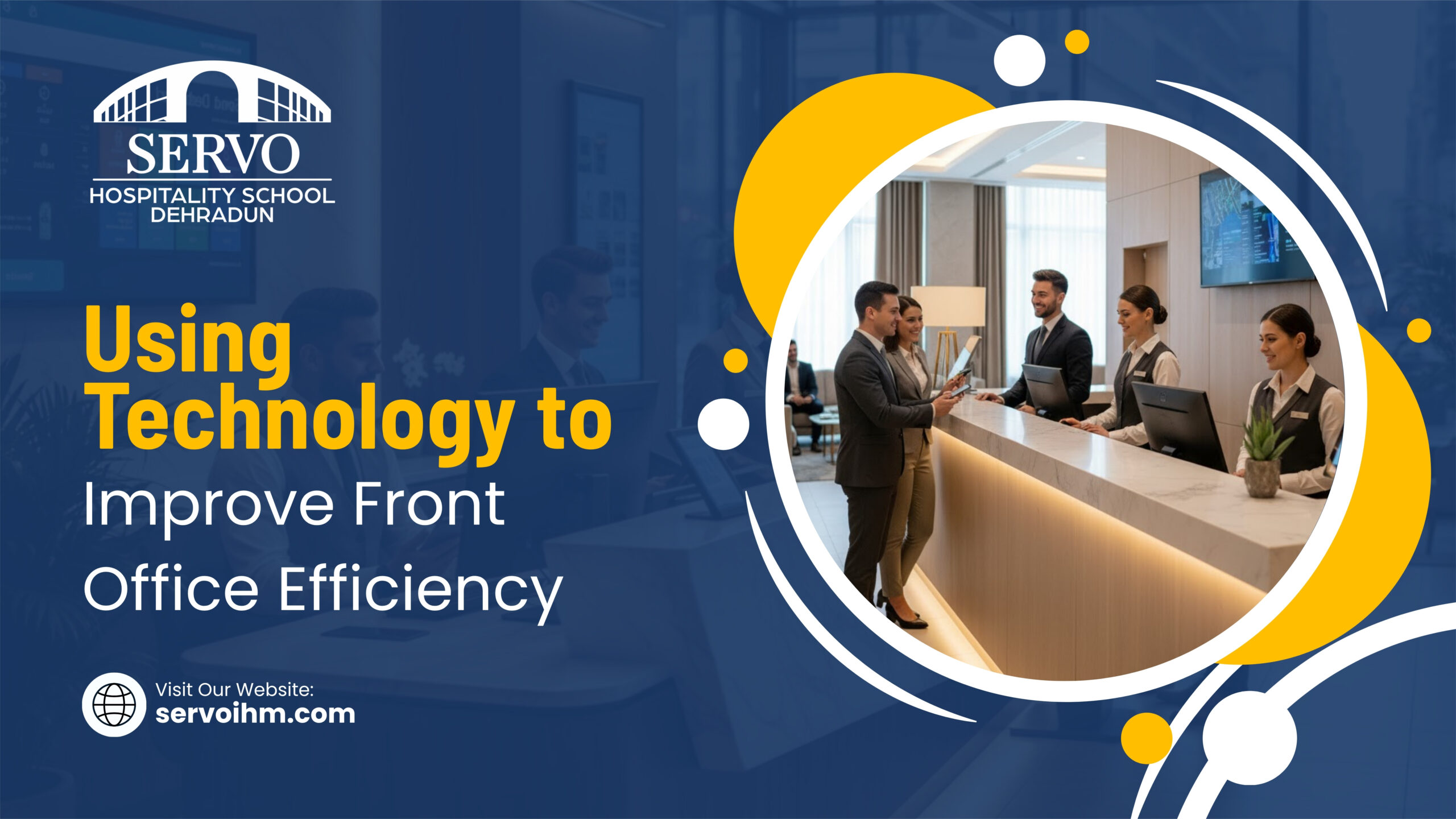
Using Technology to Improve Front Office Efficiency
The front office is the nerve center of any hotel. It is where guests form their first impressions and where
smooth coordination sets the tone for their entire stay. In an industry where speed, accuracy, and service quality
matter most, technology has emerged as a powerful ally. By integrating modern tools and systems, hotels can
make front office operations more efficient, guest-focused, and error-free.
1. Faster Check-In and Check-Out Experiences
No guest likes waiting in long lines. Digital check-in systems, self-service kiosks, and mobile check-in options
allow guests to bypass queues and access their rooms with ease. Some hotels also offer digital keys through
apps, making the arrival and departure process quicker, smoother, and more convenient.
2. Smarter Property Management Systems (PMS)
Front office teams rely heavily on technology to manage bookings and daily operations. A powerful PMS such
as Opera PMS or Cloudbeds helps staff handle reservations, assign rooms, monitor availability, and share
updates with other departments in real time. This eliminates overbookings and improves coordination between
teams.
3. Automating Routine Work
Repetitive administrative work like sending confirmations, creating bills, and gathering guest feedback can be
automated. This frees up staff to focus on more valuable interactions with guests. Automation also minimizes
human errors and ensures that every task is completed on time.
4. Better Communication with Guests
Modern messaging platforms and AI-powered chatbots allow hotels to respond instantly to guest questions and
requests. Whether it’s about check-in times, directions, or room services, quick replies build trust and improve
guest satisfaction.
5. Data-Driven Front Office Decisions
Technology enables hotels to track guest preferences, booking trends, and feedback. This data can be used to
make better pricing decisions, adjust staffing schedules, and personalize guest experiences. Predictive tools can
even forecast occupancy and help the front desk prepare in advance.
6. Contactless and Mobile-Friendly Services
Today’s travelers appreciate convenience and safety. Mobile apps allow guests to book rooms, check in, make
payments, and even request services without visiting the front desk. This reduces waiting time and adds a
personalized touch to their stay.
7. Seamless Coordination Across Departments
Front office technology connects multiple departments such as housekeeping, maintenance, and food &
beverage. Real-time updates — like room readiness or special guest requests — ensure smooth communication,
faster service, and fewer delays.
8. Training Staff to Embrace Technology
Even the best tools are only effective when staff know how to use them. Regular training helps front office
employees adapt to new systems and use them confidently. This not only improves service quality but also
enhances staff productivity.
Conclusion
Technology has transformed the way front offices operate. Instead of replacing people, it strengthens their
ability to deliver excellent service. By embracing digital tools, hotels can speed up operations, minimize errors,
and create a more memorable guest experience. In today’s competitive hospitality world, technology isn’t just
an advantage — it’s essential for success