
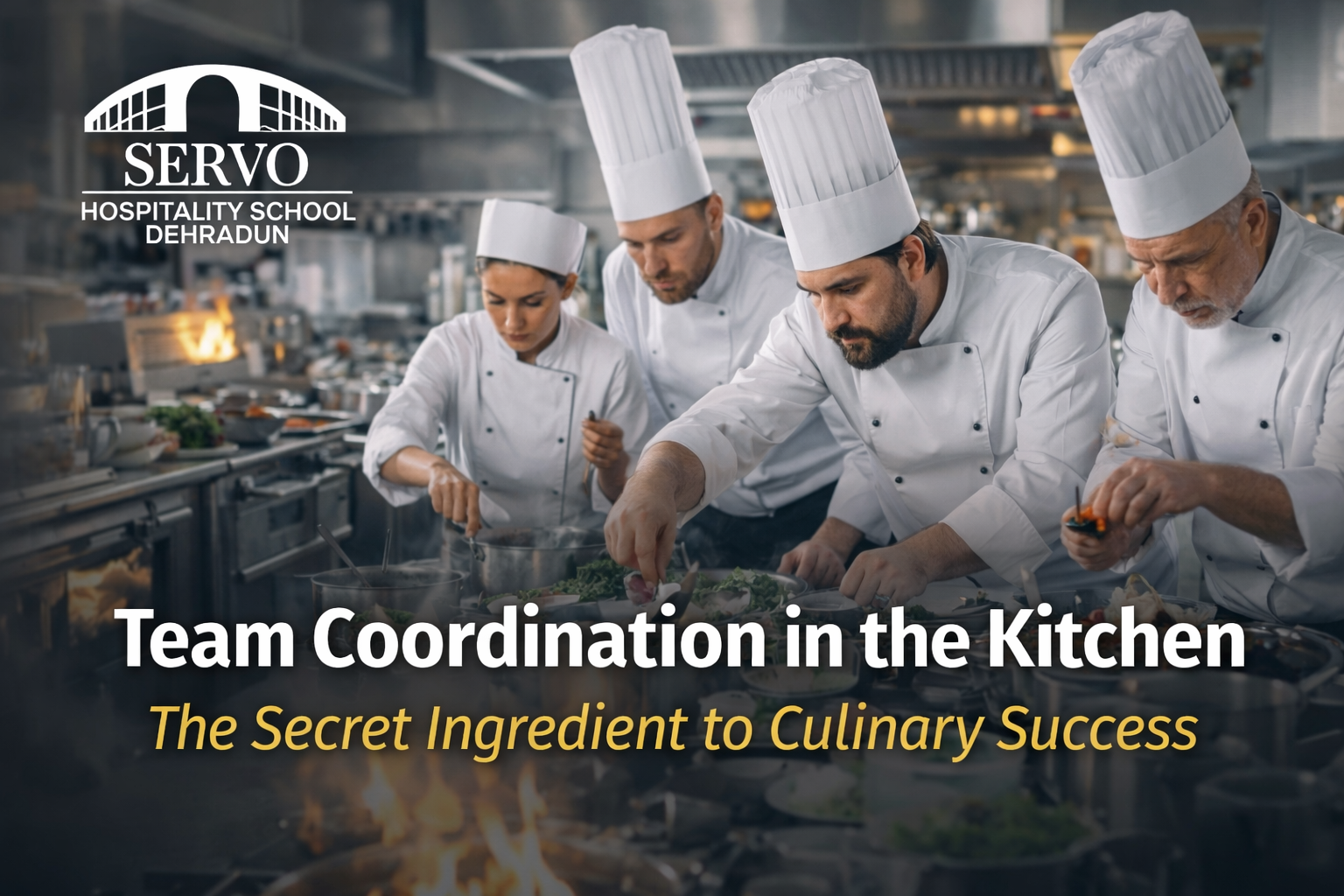
Team Coordination in the Kitchen: The Secret Ingredient to Culinary Success
Team Coordination in the Kitchen: The Secret Ingredient to Culinary Success
A successful kitchen doesn’t just rely on great recipes and fresh ingredients—it thrives on strong
teamwork and seamless coordination. Whether it’s a professional hotel kitchen, restaurant brigade,
bakery lab, or culinary classroom, excellent team coordination ensures efficiency, consistency, safety,
and quality
⇨ Why Team Coordination Matters
When every team member understands their role, communication flows smoothly, and tasks are
executed with precision.
This leads to:
Faster service without compromising quality
Fewer mistakes and less wastage
Better hygiene and food safety
A stress-free and positive working environment
Consistent taste, presentation, and standards
⇨ Clear Roles & Responsibilities
A well-organized kitchen follows structure. Common roles include:
Executive / Head Chef – Leadership, planning, decision-making
Sous Chef – Supports head chef, manages operations
Chef de Partie / Section Chef – Handles specific stations
Commis / Assistants – Support with prep and execution
Stewards / Utility Staff – Hygiene and maintenance
When everyone knows what to do, there is no confusion and operations run smoothly.
⇨ Communication is Key
Strong kitchen teamwork depends heavily on clear and timely communication.
Use precise and professional language
Confirm instructions
Share updates instantly
Stay calm during rush hours
Encourage feedback
Good communication prevents errors, saves time, and strengthens trust.
⇨ Time Management & Workflow Planning
A coordinated kitchen runs like a well-timed machine.
Plan mise-en-place properly
Follow prep lists
Prioritize tasks
Maintain rhythm and speed
Anticipate peak service times
Proper planning ensures dishes leave the kitchen hot, fresh, and on time.
⇨ Hygiene & Safety as a Shared Responsibility
Team coordination also reflects in maintaining hygiene standards.
Follow food safety protocols
Maintain workstation cleanliness
Handle equipment responsibly
Avoid cross-contamination
Support teammates in maintaining discipline
A safe kitchen is a successful kitchen.
⇨ Respect, Support & Positive Work Culture
Team spirit creates a productive environment.
Respect every role
Help when someone is overwhelmed
Appreciate effort
Learn from each other
Celebrate achievements
When the team stands together, success naturally follows.
⇨ Conclusion
Team coordination isn’t just a skill; it’s the backbone of a professional kitchen. When chefs,
assistants, and support staff work in harmony, they create not only delicious food but also
unforgettable culinary experiences. A great kitchen isn’t built by one person—it’s built by a
great team.