
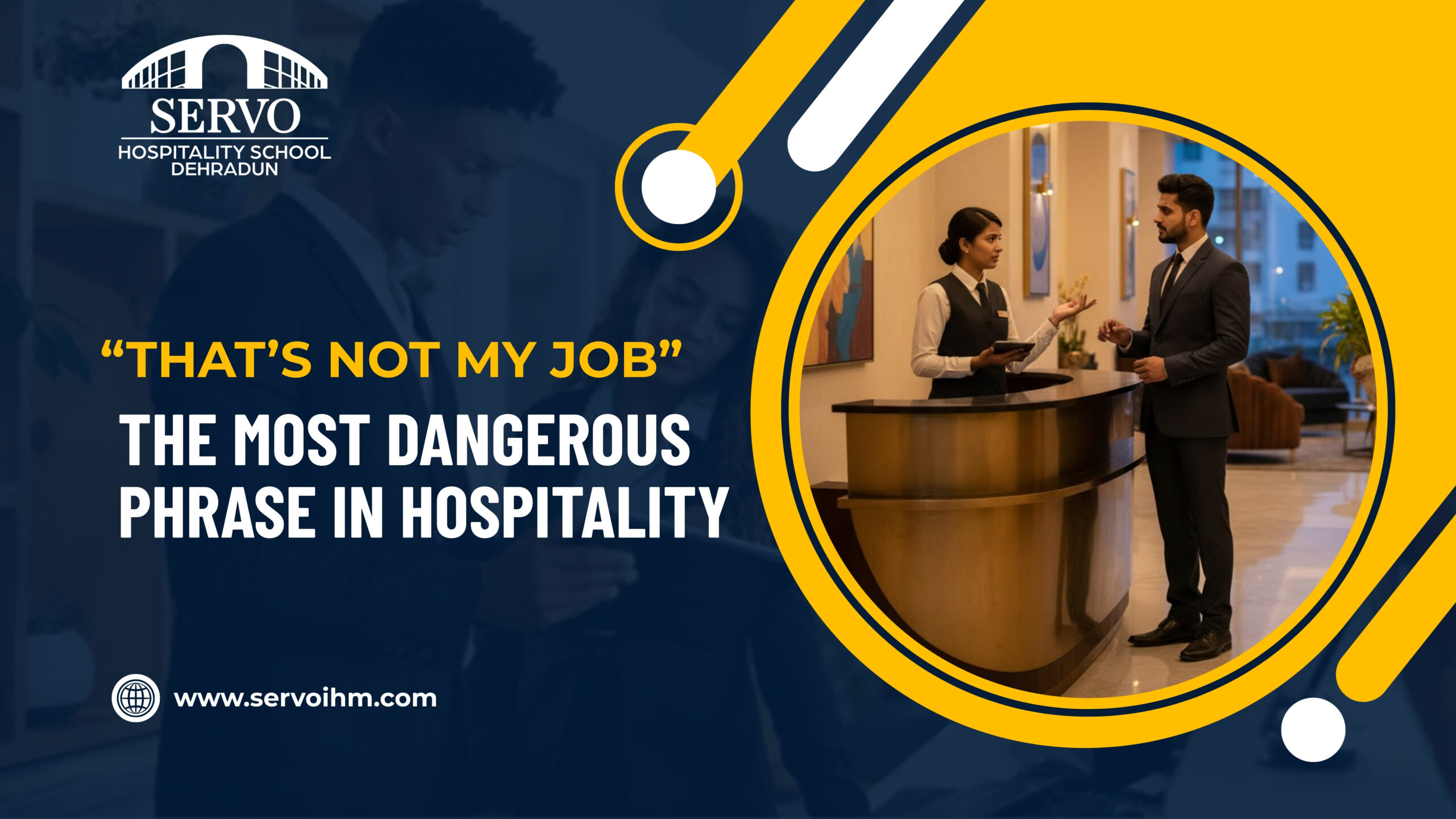
“That’s Not My Job” — The Most Dangerous Phrase in Hospitality
In the world of hospitality, few phrases can damage a guest’s experience—or a hotel’s reputation—faster than the words: “That’s not my job.”
At first glance, it might seem like an innocent statement. After all, everyone has defined roles and responsibilities. But in hospitality, where guest satisfaction is the ultimate goal, those four words can instantly break the very foundation of service excellence.
Why It’s Dangerous
Hospitality thrives on teamwork, empathy, and flexibility. When a guest approaches any staff member—whether it’s a receptionist, a housekeeper, or a chef—they don’t see job titles. They see a representative of the property.
Saying “That’s not my job” sends a clear message:
“Your problem isn’t my problem.”
And once that message reaches the guest, trust begins to erode. A single poor interaction can overshadow even the most luxurious amenities or the finest cuisine.
A Culture of Ownership
The best hospitality organizations teach their teams to take ownership rather than simply follow tasks. Ownership means seeing every guest request as an opportunity to make a difference, even if it falls outside your official duties.
If a guest asks a server for directions to the conference hall, the right response isn’t to point vaguely and walk away—it’s to personally guide them or ensure someone does. This mindset transforms ordinary service into memorable experiences.
Teamwork Makes the Guest Experience Seamless
In a hotel, every department is connected. The front office relies on housekeeping to prepare rooms, housekeeping depends on maintenance for prompt repairs, and food & beverage counts on both for smooth operations.
When employees limit themselves to narrow job descriptions, small issues turn into guest complaints. But when teams work together, guests feel cared for at every step. The most successful properties are those where everyone—from the manager to the bellboy—shares a single mission: guest satisfaction.
Leadership’s Role in Shaping Attitude
Leaders play a crucial role in eliminating the “That’s not my job” mentality. Managers must lead by example, showing that no task is beneath them. When a general manager helps clear a table during peak hours, it sends a powerful message about teamwork and humility.
Regular training, open communication, and recognition programs also help reinforce a service-oriented culture. When employees feel valued and empowered, they naturally go the extra mile.
Real Hospitality Is About Going Beyond
Hospitality is not about performing duties; it’s about creating moments. True service is when a front desk associate helps a guest find a lost item, even though it’s “not their department,” or when a housekeeper greets every guest with warmth because they understand they’re part of the guest’s overall experience.
In such moments, guests feel seen, respected, and cared for—and that’s what keeps them coming back.
Conclusion
In hospitality, success lies not in sticking to a job description but in embracing a mindset of service and collaboration. The phrase “That’s not my job” has no place in this industry because every interaction, big or small, contributes to a guest’s perception of the brand.
The most admired hotels and restaurants are built on teams who understand that every job is everyone’s job when it comes to delighting guests.
So the next time someone says, “That’s not my job,” remember—those four words can cost more than just a task. They can cost loyalty, reputation, and the very essence of hospitality.